
A waterproofing system is expected to do its job for many years, often under conditions that are difficult to control. Outdoor exposure, temperature changes, chemical contact, and ground movement can gradually affect the materials used in a project. If the waterproofing layer fails, repairing it may involve removing protective layers, interrupting operations, and carrying out additional construction work.
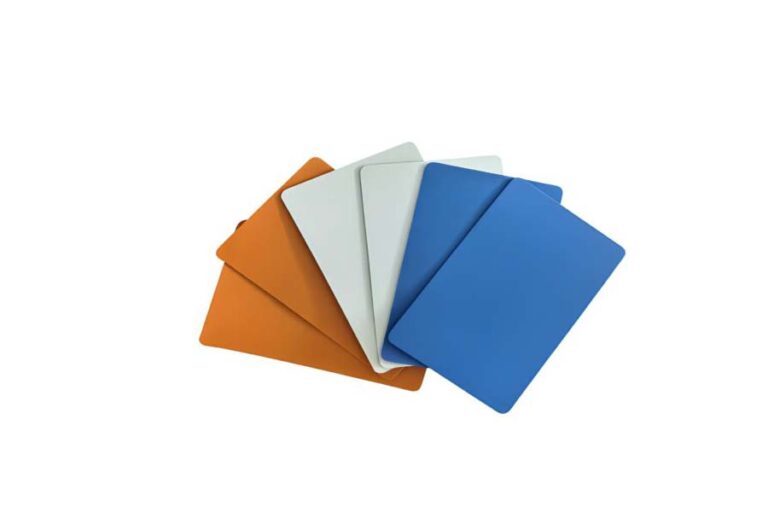
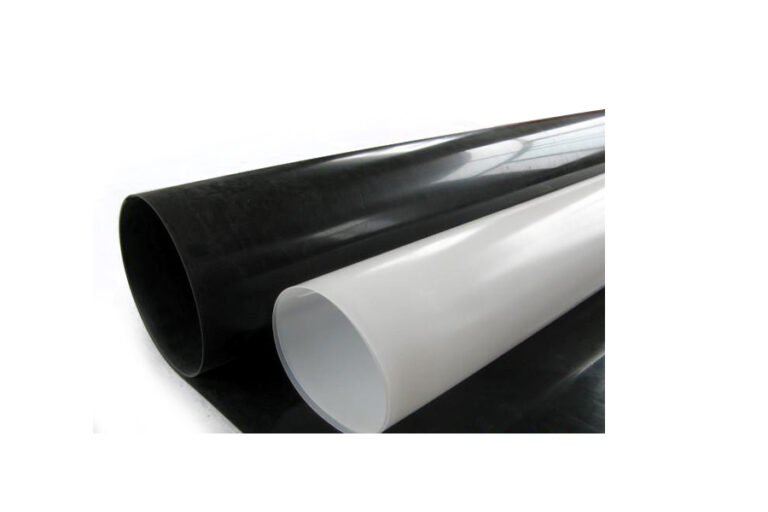
For this reason, material selection deserves careful attention from the beginning. TPO geomembrane is increasingly considered for waterproofing and containment applications because of its chemical resistance, UV stability, tensile strength, and flexibility. These properties make it a practical option for projects where long-term protection is an important requirement.
Jiantong has developed a wider TPO geomembrane product through equipment upgrades and formulation adjustments, extending its potential applications beyond conventional building waterproofing.
☀️ 1. UV Resistance Helps Maintain Outdoor Performance
Sunlight exposure is a common challenge for waterproofing materials used outdoors. Ultraviolet radiation can gradually accelerate material aging, especially when a membrane remains exposed for extended periods.
TPO geomembrane is manufactured using thermoplastic polyolefin resin as its base polymer, with dual-stabilized additives incorporated into the formulation. Its UV stability helps slow the effects of outdoor exposure and supports more consistent material performance over time.
This characteristic is relevant to applications such as exposed waterproofing systems, civil engineering containment, and other projects where sunlight exposure needs to be considered.
When selecting a UV resistant TPO geomembrane, engineers should also review the expected exposure conditions, installation environment, and relevant product test data. Material selection should reflect the actual project requirements rather than relying on general descriptions alone.
🧪 2. Chemical Resistance Supports Demanding Applications
Waterproofing materials may come into contact with more than rainwater or groundwater. In industrial and civil engineering projects, the membrane can be exposed to different liquids and environmental substances.
Chemical resistance is therefore an important consideration when selecting a geomembrane.
TPO geomembrane offers resistance to a range of chemical environments, making it suitable for projects where material compatibility is part of the engineering assessment. This property is particularly relevant to containment applications and facilities where the waterproofing layer must remain functional under demanding conditions.
Before choosing an industrial TPO geomembrane, project teams should consider the type of chemical exposure, concentration, temperature, and expected contact duration. These factors help determine whether the material is appropriate for a particular application.
💪 3. Tensile Strength and Flexibility Help Handle Ground Movement
A waterproofing membrane does not always operate on a perfectly stable surface. Minor settlement, structural movement, and uneven subgrades can place additional stress on the installed material.
A membrane with suitable tensile strength can withstand pulling forces, while flexibility helps it accommodate certain changes in the underlying structure.
Jiantong TPO geomembrane combines high tensile strength with good flexibility. These properties are useful when designing waterproofing systems that need to accommodate practical installation conditions and some degree of deformation.
However, material flexibility should not replace proper engineering design. Subgrade preparation, membrane positioning, joint treatment, and protective layers remain important parts of a reliable waterproofing system.
📏 4. Why Does a 6m Wide TPO Geomembrane Matter?
One practical limitation of conventional TPO geomembrane products is their width. Products commonly available on the market are typically around 1–2 meters wide, which makes them primarily suitable for building waterproofing applications.
For larger civil engineering projects, narrower rolls may require more individual panels and field connections. This can increase installation work and make seam management more complicated.
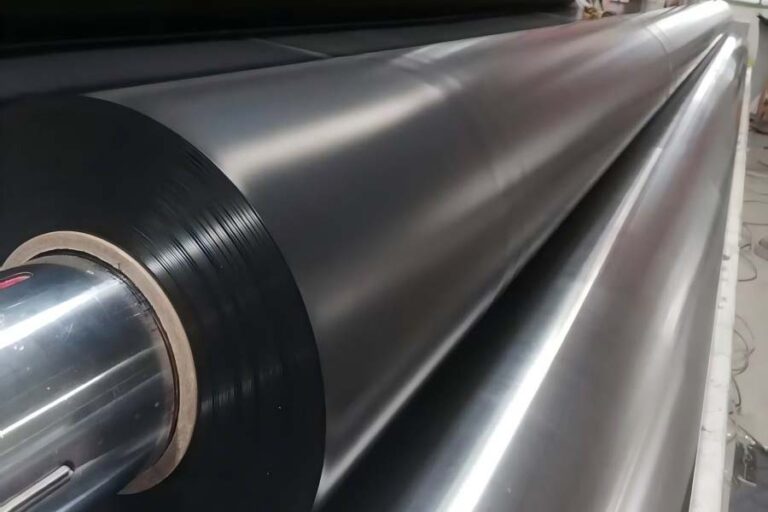
To address this limitation, Jiantong has upgraded its in-house equipment and adjusted its product formulation to develop a 6m wide TPO geomembrane.
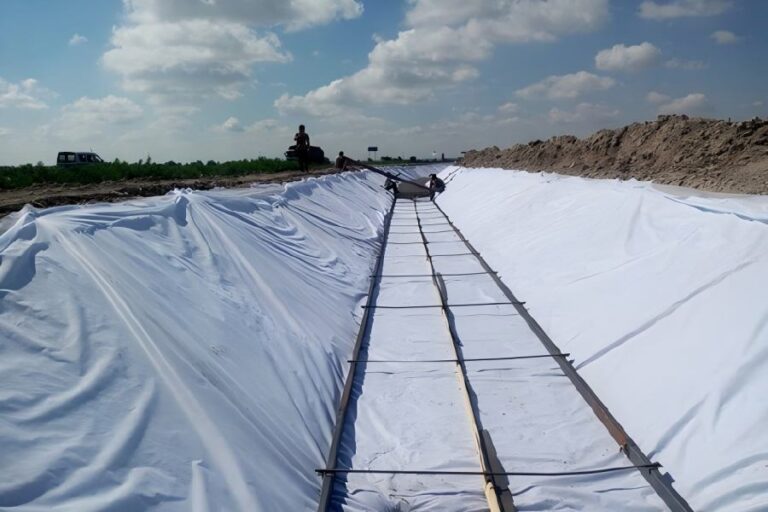
The wider format creates additional possibilities for civil engineering containment and anti-seepage applications. Depending on project dimensions and installation arrangements, wider rolls may help reduce the number of panel joints required.
For contractors, this is worth considering when planning large waterproofing areas, although actual seam quantities and installation efficiency will depend on site layout, roll lengths, and construction methods.
🔧 5. Installation Quality Still Determines Waterproofing Results
Even a high-performance geomembrane cannot compensate for poor installation.
During construction, the substrate needs to be properly prepared. Sharp objects, uneven surfaces, and unsuitable handling practices may damage the membrane before the waterproofing system is completed.
Panel connections also deserve attention. Welding or other joining methods must follow the manufacturer’s recommendations and the requirements of the selected material. Poorly executed seams can become weak points, allowing water to pass through the system.
For a successful TPO geomembrane installation, construction teams should pay attention to:
- Inspecting the substrate before laying the membrane.
- Handling rolls carefully to avoid cuts and punctures.
- Following suitable joining procedures.
- Checking seams and repaired areas before covering the membrane.
- Coordinating installation with drainage and protective layers.
These steps are just as important as selecting the membrane itself.
🌊 6. How Drainage Geonet Complements Waterproofing Systems
In some civil engineering projects, preventing water penetration is only part of the design. Water that accumulates above or behind a structure may also need to be collected and discharged.
This is where drainage geonet plays a different but complementary role.
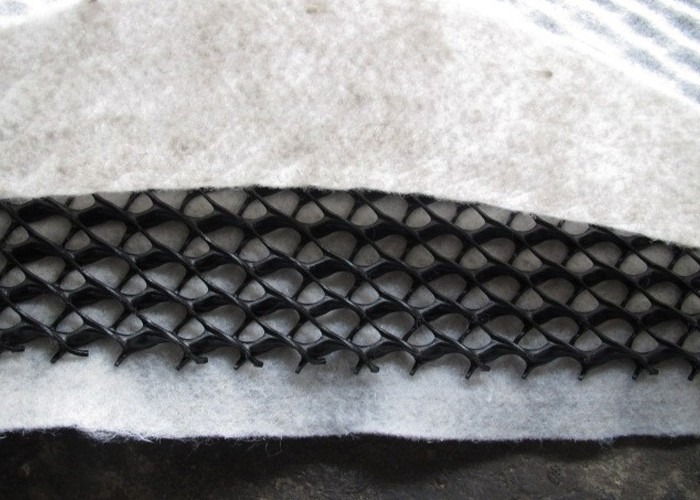
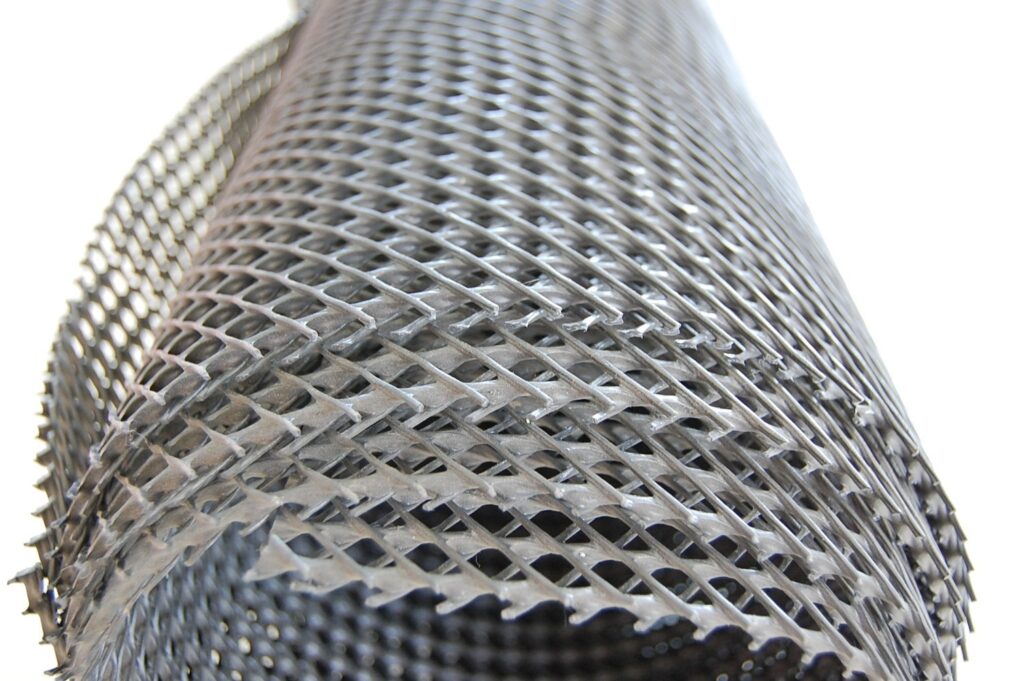
Manufactured from thermoplastic resin with UV-resistant additives, drainage geonet features a three-dimensional grid structure. Depending on the design, the structure may be square, diamond-shaped, or hexagonal.
Its main functions include:
- Water drainage: Provides channels for water movement and helps reduce hydrostatic pressure.
- Load distribution: Helps distribute loads within the drainage system.
- Chemical resistance: Offers resistance to aging, corrosion, acids, and alkalis.
- Ground adaptability: Its flexible structure can accommodate certain ground deformations.
- Erosion protection: Can contribute to slope and coastal protection systems when properly designed.
TPO geomembrane and drainage geonet serve different purposes. The geomembrane provides the anti-seepage barrier, while the geonet provides drainage pathways. When specified together in a suitable engineering design, they can form part of a more complete containment or waterproofing system.
🤝 7. TPO Geomembrane Solutions from Jiantong
Selecting a geomembrane manufacturer involves more than checking the product name. Buyers should understand the material formulation, available dimensions, technical properties, and suitability for the intended application.
Jiantong focuses on geomembrane manufacturing and has developed a 6m wide TPO geomembrane through in-house equipment improvements and formulation adjustments. This product extends the application possibilities of TPO geomembrane from conventional building waterproofing to broader civil engineering containment and anti-seepage projects.
For project owners, contractors, and material distributors, discussing project dimensions, environmental conditions, and technical requirements with the manufacturer can help identify a suitable product specification.
Conclusion
The durability of a waterproofing system depends on several factors working together. UV stability, chemical resistance, tensile strength, flexibility, and installation quality all influence how well a geomembrane performs under real project conditions.
With its wider 6m product format, Jiantong TPO geomembrane offers an additional option for civil engineering containment and anti-seepage applications. Combined with appropriate drainage solutions and proper construction practices, it can be considered as part of a waterproofing system designed around long-term project requirements.