
Seepage control is often one of the least visible parts of an engineering project. Once the liner has been installed and covered with soil, aggregate, or other protective layers, there is little to see from the surface. Yet a defect in this layer can eventually affect soil, groundwater, stored water, or the surrounding environment. Repairing a buried liner is also far more complicated than installing it correctly in the first place.
That is why HDPE geomembrane selection deserves attention during the design stage. The material needs to cope with the conditions it will actually face, including chemical exposure, temperature changes, ground settlement, mechanical loading, and long-term aging. Material quality matters, but so do the liner design and the way the membrane is installed.
What Makes HDPE Geomembrane Suitable for Seepage Control?
The main job of an HDPE geomembrane liner is to create a low-permeability barrier between the contained material and the surrounding ground. This makes it suitable for projects where water, wastewater, leachate, chemicals, or other liquids need to be contained.
Jiantong uses HDPE resin as the base material and adds carbon black masterbatch to improve resistance to UV exposure and oxidation. The raw materials are weighed and mixed before the extrusion process, producing geomembrane sheets with controlled thickness and a relatively uniform material structure.
Low permeability is only one part of the equation. A liner also needs enough mechanical strength to withstand handling and installation, as well as suitable flexibility when the underlying ground undergoes movement. Chemical resistance becomes particularly important when the membrane is exposed to aggressive liquids over a long period.
How Does Ground Movement Affect a Geomembrane?
A newly completed foundation can continue to settle or deform after construction. This is especially relevant in soft-ground projects, landfills, embankments, and other large earth structures.
If the liner cannot accommodate the expected movement, localized stress may develop within the membrane. Over time, repeated deformation can increase the possibility of tearing or cracking.
For this reason, HDPE geomembrane selection should take the foundation conditions into account. Material flexibility, elongation, tensile strength, and puncture resistance are all relevant when the liner needs to remain intact while the surrounding soil changes.
Jiantong has continued to improve its production equipment and processing methods to enhance the flexibility and aging resistance of its HDPE geomembrane. The membrane is not intended to replace proper foundation treatment, but suitable material properties can provide a useful margin of protection against normal deformation within the design conditions.
Different Applications Have Different Requirements
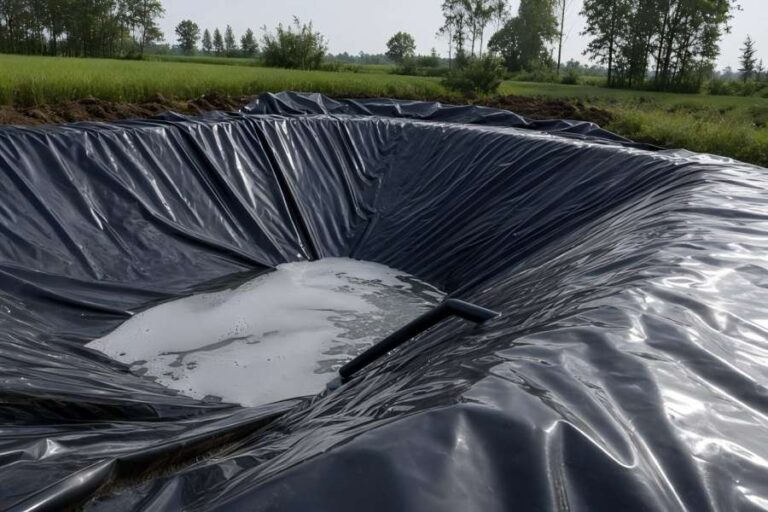
An HDPE geomembrane used in a landfill does not necessarily face the same conditions as one installed in an aquaculture pond or water conservancy project.
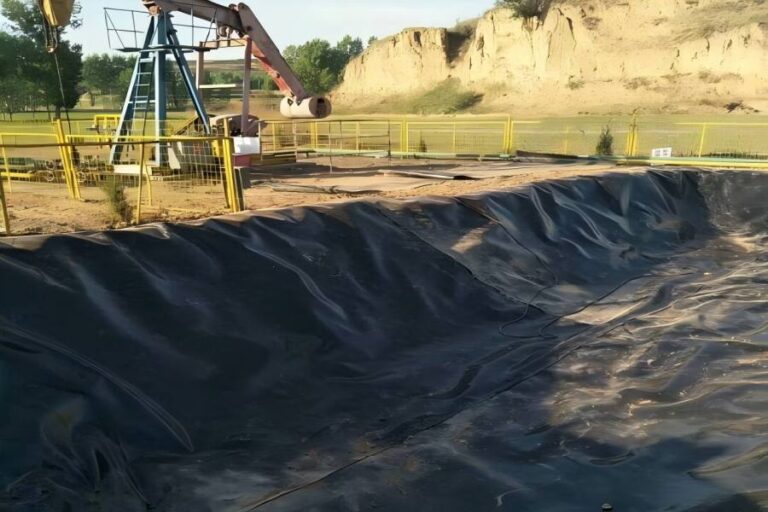
Landfills and tailings facilities may expose the liner to leachate or other complex liquids for many years. Chemical plants and fuel storage areas can involve contact with substances that place greater demands on chemical resistance. Reservoirs, artificial lakes, and ponds mainly require long-term containment under wet conditions, while aquaculture projects also place greater emphasis on material safety.
Underground municipal projects bring another set of concerns. During construction, the membrane can encounter sharp stones, uneven substrates, or mechanical loading from subsequent work. Puncture and tear resistance therefore become important considerations. The specification should follow these conditions. A thicker membrane is not automatically the right choice if other properties do not match the application.
Why Does Membrane Thickness and Uniformity Matter?
Large seepage control projects often require extensive areas of membrane. Small variations in thickness across a roll may not be obvious during a visual inspection, but inconsistent sections can affect the mechanical and barrier performance of the material.
Jiantong uses an extrusion process designed to maintain consistent material distribution and thickness. Raw materials are inspected before entering production, while equipment and process parameters are monitored during manufacturing. Finished geomembranes are sampled for testing, including tensile performance, impermeability, and aging-related properties.
This type of production control becomes particularly important when the material will be installed over a large area. Once the liner is covered, identifying and replacing a weak section becomes much more difficult.

Chemical Resistance Matters in Containment Projects
Not every seepage control project involves clean water. Landfill leachate, industrial wastewater, chemical liquids, and other contained media can place additional demands on the liner.
HDPE has good resistance to many acids, alkalis, and chemical substances, which is one reason it is widely used in environmental and industrial containment applications. However, chemical compatibility should still be considered according to the actual medium, concentration, temperature, and exposure time.
For an HDPE geomembrane liner, material selection should therefore be based on the service environment rather than on general chemical resistance claims. Where the contained medium is complex, discussing the conditions with the manufacturer before finalizing the specification is a practical step.
Installation Can Determine Whether the Liner Works
A good membrane can still fail if the installation is poorly controlled. This is one of the most important points in any geomembrane installation project.
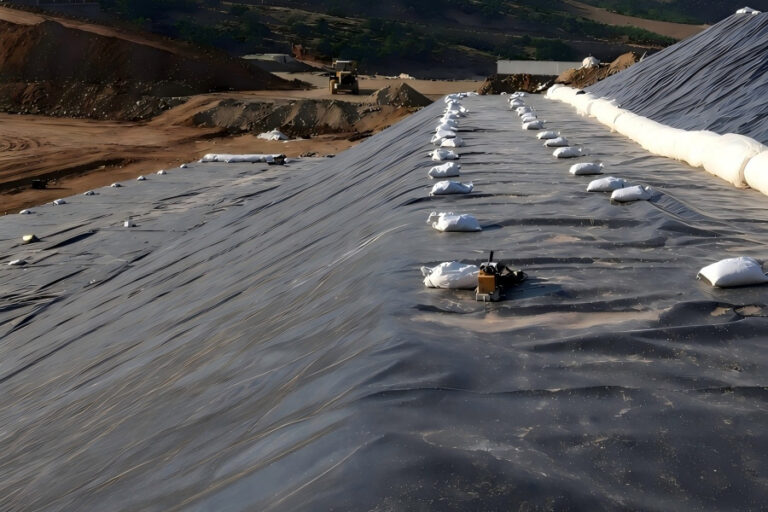
The foundation needs to be properly prepared before the rolls are deployed. Sharp stones, construction debris, voids, and uneven surfaces can create mechanical stress or puncture risks. The membrane must also be handled carefully during placement to avoid unnecessary damage.
Welding is another critical stage. Individual sheets need to be joined into a continuous barrier, and the finished seams should be inspected according to the project requirements. Problems with welding temperature, pressure, equipment condition, or operator technique can create weak points in the liner system.
Protection after installation matters as well. Backfill and cover materials should be placed in a way that does not damage the membrane. A complete geomembrane liner system therefore depends on both the material and the construction process.
How Can Geomembrane Work With Geotextiles?
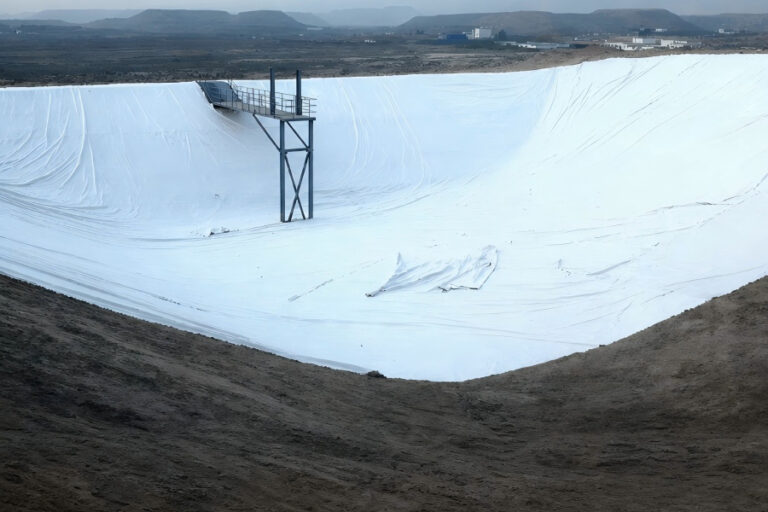
An HDPE liner is often used together with other geosynthetic materials. A geotextile can be installed above or below the membrane to provide separation and cushioning, depending on the project design.
This combination is useful where the geomembrane needs protection from sharp particles or where drainage and filtration are also required. The geotextile can reduce direct contact between the membrane and surrounding materials, while the geomembrane provides the primary low-permeability barrier.
The final arrangement depends on the site conditions and engineering design. Treating the membrane as one component of a complete seepage control system usually gives engineers more flexibility when addressing mechanical and hydraulic requirements.
Jiantong’s Approach to HDPE Geomembrane
Jiantong develops HDPE geomembrane products around the practical requirements of different engineering applications. The company uses HDPE resin with carbon black additives for UV and oxidation resistance and controls the production process from raw material preparation through extrusion and finished-product inspection.
Product testing covers key properties such as tensile strength, impermeability, and aging resistance. At the project level, Jiantong also provides technical assistance with material selection and installation requirements.
This allows the discussion to move beyond a simple product quotation. Geological conditions, contained media, expected service environment, and construction methods can all be considered before the material specification is finalized.
How Can HDPE Geomembrane Reduce Long-Term Seepage Risk?
Long-term seepage control does not depend on one property alone. The membrane needs low permeability, suitable mechanical strength, resistance to the surrounding environment, and enough flexibility for the expected ground conditions. Manufacturing consistency is equally important, while welding and installation determine whether individual membrane sheets become a reliable continuous barrier.
For project owners and contractors, addressing these factors early can prevent many problems that are difficult to correct after construction. Choosing the right HDPE geomembrane liner is therefore part of the engineering design rather than simply a purchasing decision.
Jiantong continues to improve its HDPE geomembrane materials and manufacturing processes for environmental protection, water conservancy, chemical, municipal, and aquaculture applications. By combining material production with application-oriented technical support, Jiantong provides a practical foundation for long-term seepage control.
FAQ About HDPE Geomembrane
What is HDPE geomembrane used for?
HDPE geomembrane is primarily used as a low-permeability liner for seepage control and containment. Common applications include landfills, tailings facilities, wastewater projects, ponds, reservoirs, aquaculture facilities, chemical sites, and other environmental or civil engineering projects.
How long can an HDPE geomembrane last?
Service life depends on factors such as UV exposure, temperature, chemical contact, mechanical loading, installation quality, and whether the membrane is exposed or protected. Proper material selection and installation are important for achieving long-term performance.
Is HDPE geomembrane resistant to chemicals?
HDPE offers good resistance to many acids, alkalis, and other chemical substances. However, chemical compatibility should be checked against the specific liquid, concentration, temperature, and expected exposure conditions before selecting the liner.
What can damage an HDPE geomembrane during installation?
Sharp stones, construction debris, excessive tension, improper handling, poor welding, and unsuitable backfilling can all damage a geomembrane. Proper substrate preparation, seam inspection, and protective-layer installation help reduce these risks.
Can HDPE geomembrane be used with geotextiles?
Yes. Geotextiles are commonly used together with HDPE geomembranes as separation, cushioning, filtration, or protective layers. The specific arrangement depends on the requirements of the complete geotechnical and seepage control system.
How should an HDPE geomembrane be selected?
Selection should consider the project environment, contained medium, foundation conditions, expected loading, temperature, chemical exposure, installation method, and required mechanical and hydraulic properties. Thickness is only one factor in the overall selection process.