
When it comes to seepage control, there is no shortage of waterproofing materials on the market. The challenge is that actual engineering conditions are rarely as simple as the product catalog suggests. A geomembrane can provide excellent impermeability, but it still needs protection from sharp stones, concrete edges, construction debris, and other sources of mechanical damage. Geotextile is good at separation, drainage, and protecting the surface of a lining, but it cannot replace an impermeable membrane where water containment is required.
This is one of the main reasons composite geomembrane has become more common in water conservancy, environmental protection, transportation, and other infrastructure projects. Instead of asking one material to handle every requirement, the composite structure allows the different layers to do what they are best suited for.
A Composite Structure Solves More Than One Problem
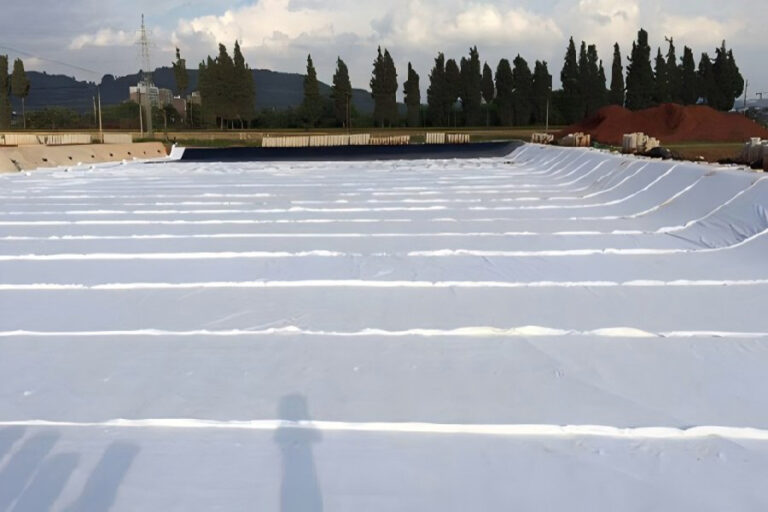
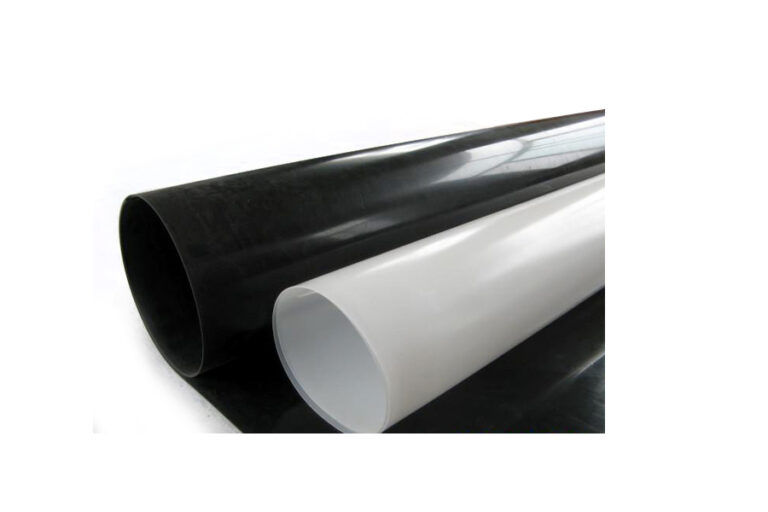
A typical composite geomembrane combines an impermeable geomembrane with geotextile. The HDPE layer acts as the main barrier against water and liquid migration, while the geotextile provides additional protection and separation.
That combination is particularly useful on sites where the foundation is not perfectly uniform or where the lining will be exposed to mechanical loads during construction. Consider a simple example. If an HDPE geomembrane is placed directly over a rough foundation containing a small amount of aggregate, the material may be exposed to concentrated pressure at individual points. Over time, or even during installation, this can increase the risk of puncture.
With a geotextile layer incorporated into the system, the contact between the membrane and the surrounding structure is better controlled. The textile layer can help distribute localized stress and protect the membrane from direct contact with potentially damaging materials. It is not a complicated concept, but it can make a significant difference in the field.
Why a Single Material Is Not Always Enough
Traditional waterproofing designs often rely heavily on the properties of one material. In straightforward applications, that may work well. More complicated projects are different. A reservoir dam may experience water pressure as well as foundation settlement. A roadbed may need separation and drainage in addition to moisture control. A landfill liner has to deal with puncture risks and potentially aggressive leachate. These conditions place different demands on the lining system.
Using a composite geomembrane does not eliminate the need for proper engineering design, but it gives designers more flexibility. The membrane thickness, geotextile weight, and overall composite structure can be selected according to the expected working conditions.
That is often more practical than trying to make one material handle everything.
Where Composite Geomembrane Is Commonly Used
Water Reservoirs and Dam Structures
Water conservancy projects are one of the most familiar applications.
Reservoirs, irrigation ponds, canals, and dam structures need reliable seepage control, but they also have to cope with settlement and changes in the underlying structure. The lining material needs enough flexibility to accommodate these movements without losing its sealing function.
For these applications, the selection of membrane thickness and geotextile specification should be based on factors such as water pressure, foundation conditions, slope design, and expected service life.
Installation details matter just as much. Anchoring, seam welding, and treatment around corners and pipe penetrations need to be planned together with the lining system rather than left until the construction stage.
Road and Railway Subgrades
The requirements are somewhat different in road and railway construction.
Here, the material may be used to separate soil layers, control water movement, and protect the structure from excessive moisture. The geotextile component can help prevent fine soil particles from migrating into adjacent layers, while the geomembrane limits water infiltration.
The protective function is also useful during construction. Aggregate placement and equipment movement can create considerable mechanical stress, particularly when the underlying surface is not perfectly smooth.
A properly selected geotextile geomembrane system can provide both separation and waterproofing without requiring completely separate materials for each function.
Landfills and Waste Containment
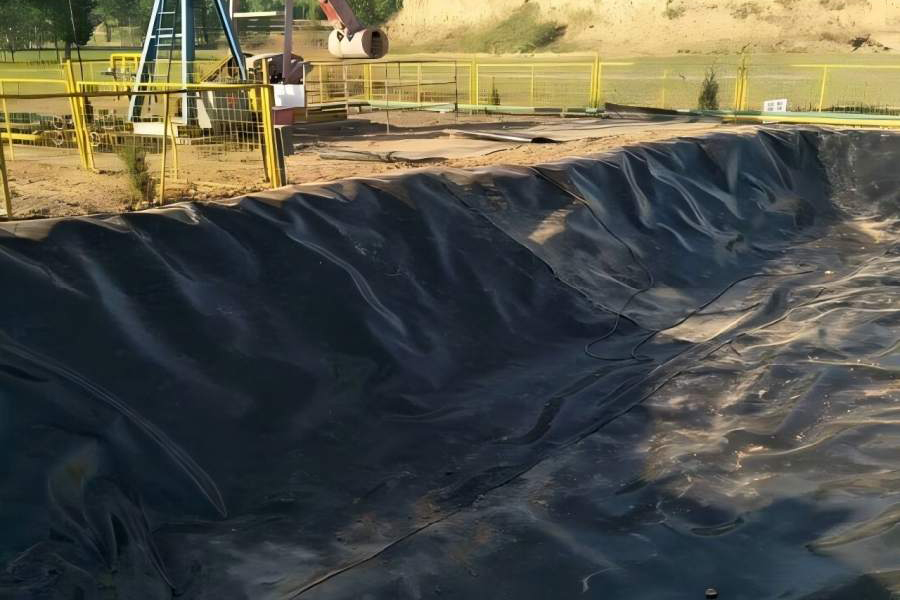
Landfill projects have much stricter requirements because the purpose of the liner is not simply to keep water out. It also needs to prevent contaminated liquids from moving into the surrounding soil and groundwater.
HDPE is widely used in these applications because of its low permeability and resistance to many chemicals. The addition of geotextile can provide another layer of physical protection, helping reduce the possibility of damage from the subgrade or materials placed above the liner.
For industrial waste and chemical containment projects, however, product selection should always be based on the actual chemical environment. Acid concentration, alkaline conditions, temperature, exposure time, and other factors can influence the appropriate geomembrane formulation and thickness.
There is no universal specification that works equally well for every containment project.
The Quality of the Composite Process Matters
It is easy to look at composite geomembrane as simply two materials bonded together. In production, it is not quite that straightforward. The interface between the geotextile and geomembrane needs to remain stable during handling, installation, and long-term service. If the bonding is inconsistent, the layers may separate when exposed to repeated stress, temperature changes, or movement of the foundation.
This is why manufacturing control is important.
At Jiantong, production focuses on maintaining consistent bonding and material properties across different batches. Raw materials are inspected before entering production, while key manufacturing parameters such as temperature, pressure, and thickness are monitored during the composite process.
Finished products are also inspected before shipment. For large engineering orders, consistency between rolls can be just as important as the specification itself. Contractors need to know that material delivered in a later batch will behave in the same way as the material used at the beginning of the project.
Traceability is another useful part of quality control. Keeping production and batch records makes it easier to identify the source of a material and deal with any quality questions that may arise later.
The Right Specification Depends on the Site
One mistake sometimes made in geomembrane selection is treating standard specifications as a universal answer.
A reservoir and a landfill do not have the same requirements. Neither does a railway subgrade.
For a dam or reservoir, flexibility and resistance to deformation may receive more attention. For a road project, protection and separation can be particularly important. In a landfill or industrial containment facility, chemical resistance and long-term impermeability may be the main concerns.
The composite structure can therefore be adjusted according to the application. Membrane thickness, geotextile weight, and material configuration are among the factors that can be considered during product selection.
This is also where communication between the manufacturer, designer, and contractor becomes important. A specification should be based on the actual project conditions rather than selected simply because it is the most commonly used option.
Installation Still Makes a Big Difference
A good product cannot compensate for poor installation.
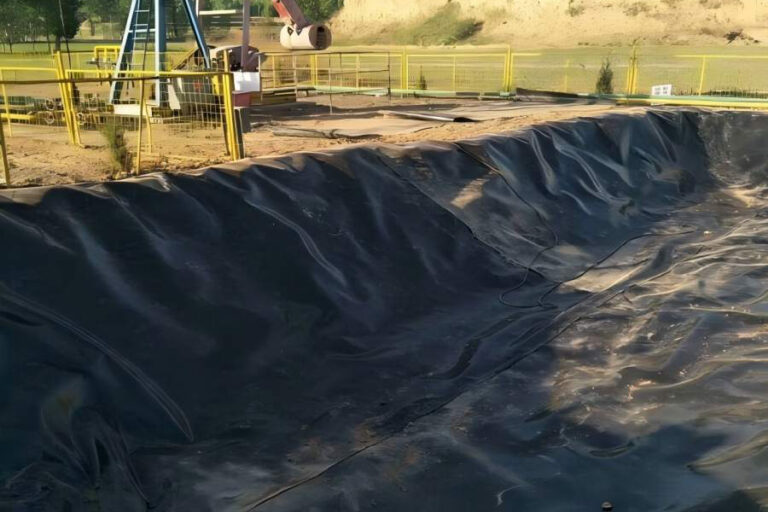
Before the geomembrane is laid, the foundation should be inspected carefully. Sharp stones, exposed reinforcement, concrete fragments, metal pieces, and other objects that could damage the membrane should be removed.
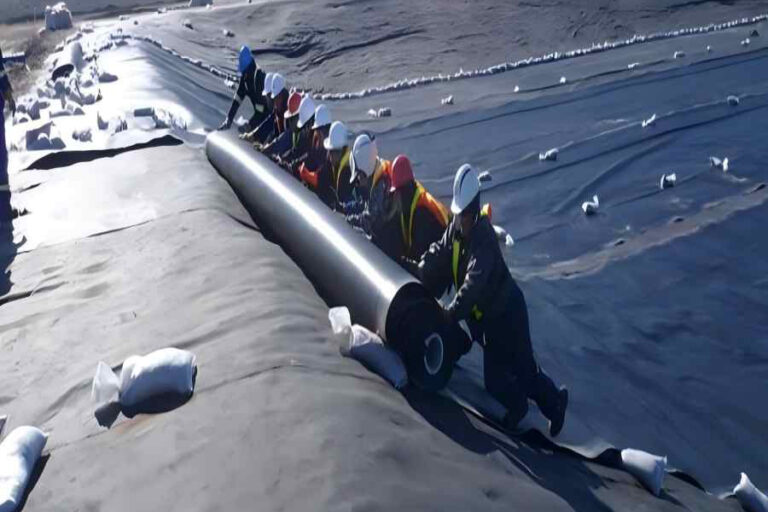
The material then needs to be positioned without excessive wrinkles or unnecessary tension. Particular care should be taken around slopes, corners, pipe penetrations, and other transitions.
Where HDPE geomembrane seams are required, welding should be carried out with equipment and parameters suitable for the material and site conditions. Welded seams should be inspected and tested according to the project requirements.
The same applies to anchoring and edge treatment. These areas are often small compared with the total lining area, but they can become weak points if they are not properly designed and installed. For large projects, construction records and inspection results should also be retained. They provide useful documentation for future maintenance and project acceptance.
What Engineers Should Look for in a Composite Geomembrane
When comparing products from different suppliers, price is only one part of the decision.
It is worth looking at the actual structure of the product, the quality and consistency of the raw materials, bonding strength, membrane properties, geotextile specifications, welding performance, and quality-control procedures.
The manufacturer’s ability to adjust the product to a particular application is also important. A supplier that understands the difference between a dam lining and a landfill liner can usually provide more useful technical support than one offering only a fixed list of standard products.
Jiantong works with customers on product selection based on the intended application, installation conditions, and required performance. This can include recommendations on membrane thickness, geotextile weight, composite structure, and installation considerations. For engineering projects, that practical support can be just as valuable as the material itself.
Composite Geomembrane Is Becoming a More Practical Choice
The growing use of composite geomembrane is not simply a matter of following a new material trend. Engineering projects are becoming more demanding, and waterproofing systems increasingly need to deal with several problems at the same time. Impermeability is still the primary requirement, but protection, separation, flexibility, and resistance to construction damage also have to be considered.
By combining a geomembrane with geotextile, a composite system addresses several of these requirements in one lining solution.
For applications ranging from reservoirs and roadbeds to landfills and industrial containment, the key is still proper engineering: choose the right structure, manufacture it consistently, and install it correctly. That is the approach behind Jiantong composite geomembrane solutions—using the advantages of different geosynthetic layers together rather than expecting a single material to do every job.