
In water conservancy and environmental engineering projects, preventing water leakage is one of the most important factors affecting long-term project performance. Choosing the right waterproofing material can help improve structural stability, reduce water loss, and extend the service life of engineering facilities.
A Composite Geomembrane has become a widely used waterproofing solution in many projects because it combines the advantages of both geotextile and geomembrane materials. Also known as one cloth one membrane or two cloth one membrane, composite geomembrane is manufactured by thermally bonding geotextile with geomembrane, providing excellent anti-seepage, isolation, and protection performance.However, composite geomembrane is not suitable for every waterproofing application. Selecting the wrong material or ignoring important technical parameters may lead to unsatisfactory engineering results.
Jiantong provides high-quality composite geomembrane solutions for different engineering applications, helping customers select suitable waterproofing materials based on project conditions, technical requirements, and application environments.
What Makes Composite Geomembrane Suitable for Water Conservancy Projects?
The biggest advantage of composite geomembrane is its integrated structure. The outer geotextile layer protects the inner geomembrane from external damage, while the geomembrane layer provides the main waterproofing function.
Compared with single-layer waterproofing materials, composite geomembrane offers additional protection and better adaptability in complex construction environments.
The geotextile layer can:
- Protect the geomembrane from punctures caused by sharp objects
- Improve separation performance between different soil layers
- Provide drainage functions in certain applications
- Enhance overall construction stability
Because of these advantages, composite geomembrane is widely used in water conservancy and environmental protection projects.

Where Is Composite Geomembrane Commonly Used?
Composite geomembrane is widely applied in projects that require reliable anti-seepage performance, especially where both waterproofing and soil protection are needed.
Common applications include:
| Application Area | Main Function |
|---|---|
| Reservoir dams | Prevent water leakage and improve dam stability |
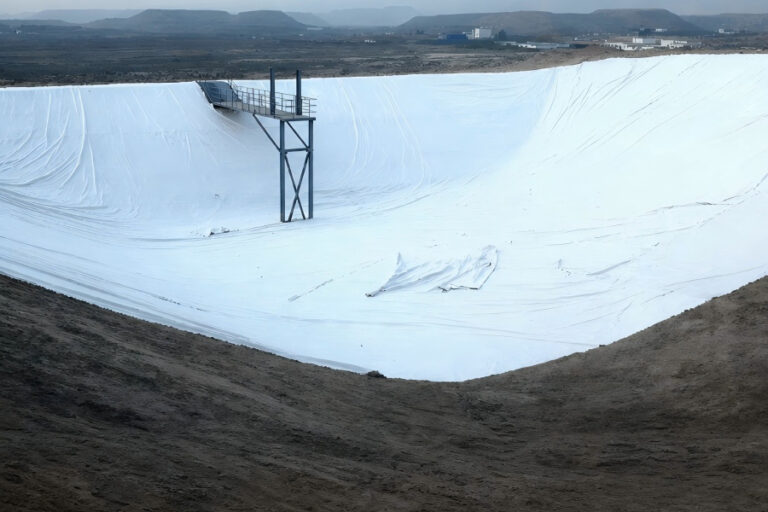
| Water storage ponds | Reduce water loss and improve waterproof performance |
| Canal lining projects | Control seepage and protect soil structures |
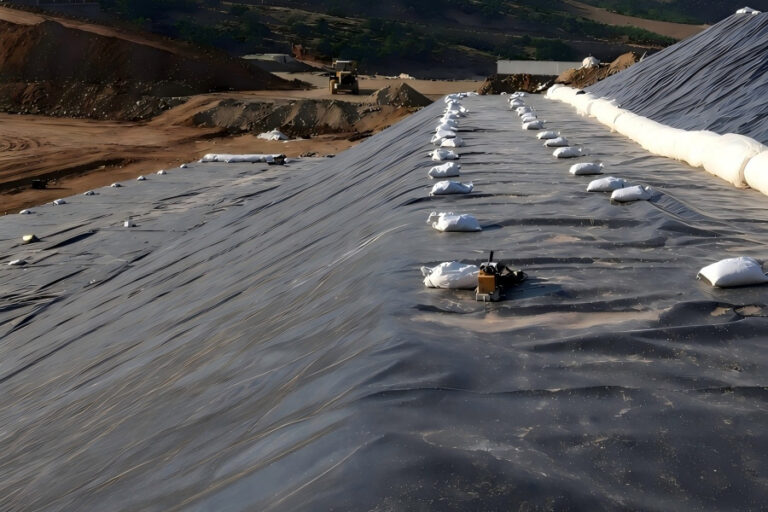
| Waste residue sites | Prevent pollutant leakage into surrounding soil |
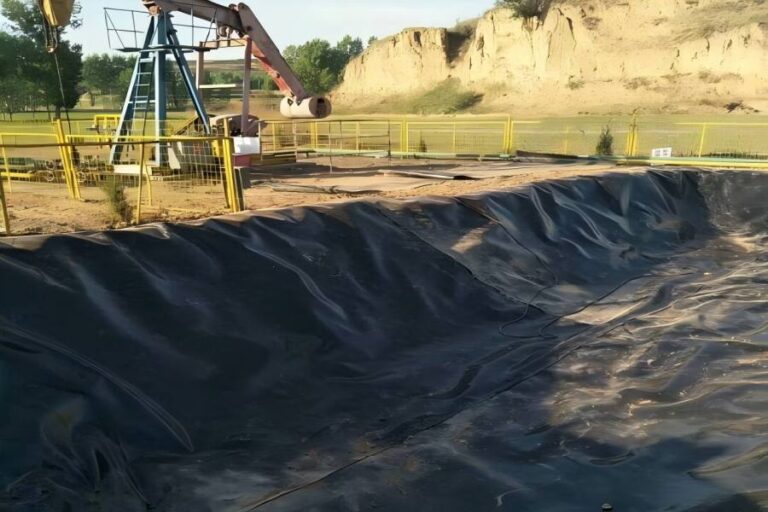
| Environmental engineering projects | Provide long-term waterproof protection |
In dam and canal projects, composite geomembrane provides both anti-seepage and soil protection functions. It helps reduce water infiltration, improve soil stability, and maintain the long-term operation of the project.
Why Should You Pay Attention to Geomembrane Thickness When Purchasing?
When purchasing composite geomembrane, many buyers focus mainly on the total weight or overall grammage. However, this can lead to misunderstandings.
Composite geomembrane consists of geotextile and geomembrane layers. A higher total weight does not always mean the waterproof membrane layer is thick enough.
For example, a product with a high total grammage may contain more geotextile weight while the actual geomembrane thickness remains insufficient.
Therefore, when selecting composite geomembrane, buyers should clearly confirm two separate specifications:
| Specification | Importance |
|---|---|
| Geotextile weight (g/m²) | Determines protection and reinforcement performance |
| Geomembrane thickness | Determines waterproofing capability |
When signing a purchasing contract, these two parameters should be clearly listed instead of only specifying the total weight. This helps prevent receiving products with insufficient membrane thickness that may affect the overall waterproofing performance.

Is Composite Geomembrane Suitable for All Waterproofing Applications?
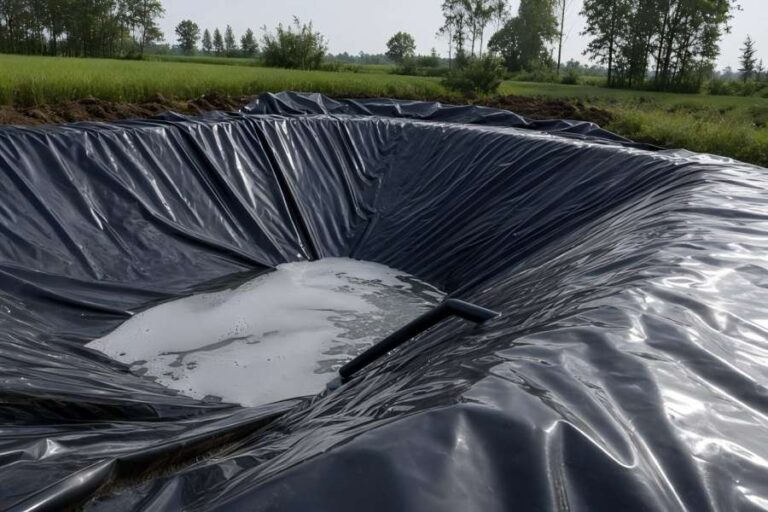
Although composite geomembrane performs well in many engineering projects, it is not the best choice for every application. For example, fish ponds and aquaculture ponds usually have different requirements. Composite geomembrane is generally not recommended for these applications because the outer geotextile layer may easily accumulate sediment and provide conditions for algae growth. Over time, this can increase cleaning and maintenance difficulties. For aquaculture projects, smooth geomembrane is often a more suitable option because its flat surface is easier to clean and maintain. Therefore, material selection should always be based on actual project conditions rather than choosing a product only because of its general waterproofing performance.
How to Ensure Composite Geomembrane Quality During Installation?
Before installation, quality inspection is an important step to ensure long-term waterproofing performance.
During incoming inspection, customers should check not only the specifications but also the bonding quality between the geotextile and geomembrane.
A high-quality composite geomembrane should have:
- Uniform composite bonding
- No large-area separation between layers
- Stable material structure
- Consistent thickness and appearance
During construction, welding quality is another key factor affecting waterproof performance.
For composite geomembrane welding, the recommended process is:
- Separate and peel back the geotextile layers on both sides.
- Weld the exposed middle geomembrane layer.
- Complete the geotextile overlap treatment after membrane welding.
This method helps ensure that the waterproof layer achieves reliable sealing performance while maintaining the protective function of the geotextile.
How to Choose the Right Composite Geomembrane for Your Project?
Choosing suitable composite geomembrane requires comprehensive consideration of project conditions, including:
- Engineering environment
- Waterproofing requirements
- Soil conditions
- Construction methods
- Design specifications
- Long-term maintenance needs
Different projects may require different combinations of geotextile weight and geomembrane thickness. Therefore, professional consultation and accurate parameter selection are essential before purchasing.
Jiantong focuses on providing reliable geomembrane solutions and helping customers select suitable products according to specific engineering requirements.
Why Choose Jiantong Composite Geomembrane?
With professional manufacturing experience and strict quality control, Jiantong provides composite geomembrane products designed for various waterproofing and protection applications.
Our composite geomembrane solutions offer:
- Reliable anti-seepage performance
- Strong puncture resistance
- Flexible application options
- Stable composite structure
- Suitability for large-scale engineering projects
From reservoirs and canals to environmental protection projects, Jiantong helps customers improve waterproofing performance and achieve long-lasting engineering results.
Summary:
As water conservancy and environmental engineering continue to develop, reliable waterproofing materials are becoming increasingly important. Composite Geomembrane provides an effective solution by combining the protection advantages of geotextile with the waterproof performance of geomembrane. However, successful application depends on correct material selection, accurate parameter confirmation, and proper construction methods. By understanding project requirements and avoiding common purchasing mistakes, engineers and contractors can fully utilize the advantages of composite geomembrane and improve the durability of waterproofing systems.
Jiantong is committed to providing high-quality composite geomembrane solutions to support reliable and sustainable engineering projects worldwide.