
In a geotechnical project, the main structure usually receives most of the attention during design. The foundation, retaining structure, pavement, embankment, and waterproofing system are carefully calculated, while materials used between these structures are sometimes treated as secondary components. In practice, however, poor drainage or uncontrolled movement of soil particles can gradually affect the performance of the entire system. Subgrade pumping, soil loss, clogged drainage layers, and damage to waterproofing membranes are common examples.
A geotextile is often used to deal with these problems. Depending on the project, it can separate different soil layers, filter water, assist drainage, distribute stress, or protect a geomembrane from mechanical damage. Its value comes from how these functions work together within the overall geotechnical design.
Separation Starts With Keeping Different Materials Apart
Roadbeds and other earth structures often contain several materials with very different particle sizes. A typical road, for example, may have native soil beneath a layer of aggregate or selected fill. Without a separation layer, repeated traffic loads and changes in moisture can cause fine particles from the subgrade to migrate upward into the aggregate. At the same time, aggregate can gradually sink into softer soil.
A geotextile fabric placed between the two layers helps prevent this intermixing. The fill material keeps its designed gradation, while the underlying soil remains separated from the structural layer above it. Water can still move through the fabric, so separation does not have to mean creating an impermeable barrier.
This application is particularly useful on soft or unstable foundations, where maintaining the original structure of the roadbed is important for long-term performance. In road construction and expansion projects, proper separation can also reduce problems associated with uneven settlement and repeated loading.

Filtration and Drainage Work Together 💧
Moving water through a soil structure is not simply a matter of providing an open drainage path. Water often carries fine soil particles with it. If those particles enter a drainage layer, they can gradually reduce its permeability and eventually affect drainage performance.
A nonwoven geotextile can act as a filter between the soil and drainage material. Its pore structure allows water to pass through while retaining an appropriate proportion of soil particles. This helps maintain the drainage path without allowing excessive soil migration.
The required filtration performance depends on the soil itself. Fine-grained soil, coarse soil, high-flow conditions, and different hydraulic gradients can require different material characteristics. For this reason, choosing a geotextile filter by weight alone can be misleading. Apparent opening size, permeability, tensile properties, and the characteristics of the surrounding soil all need to be considered.
In drainage applications, the fabric is doing two jobs at the same time: allowing water to move and keeping the soil where it belongs.
Needle-Punched Structure Gives the Material Flexibility
Manufacturing has a direct influence on geotextile performance. Jiantong produces its geotextiles using a short-fiber needle-punched process. The fibers are mechanically entangled to form a three-dimensional structure with interconnected pores.
For engineering applications, this structure provides useful flexibility. Geotextiles are often installed on foundations that are not perfectly uniform, and the surrounding soil can continue to deform after construction. A flexible material can adapt to these changes more readily than a rigid layer.
Mechanical performance is equally relevant. During installation and service, the fabric may experience pulling, compression, or localized loads. Adequate tensile strength and tear resistance help the material remain intact when the surrounding soil shifts or when construction equipment places additional stress on the system.
Four Functions, One Protection Layer
Separation and filtration are the functions most commonly associated with geotextiles, but they are not the only ones. In suitable designs, the material can also contribute to reinforcement and cushioning protection.
When placed beneath a road or embankment, the tensile properties of the fabric can help distribute localized stress across a wider area. It does not replace the structural design of the roadbed, but it can provide additional support within the soil system.
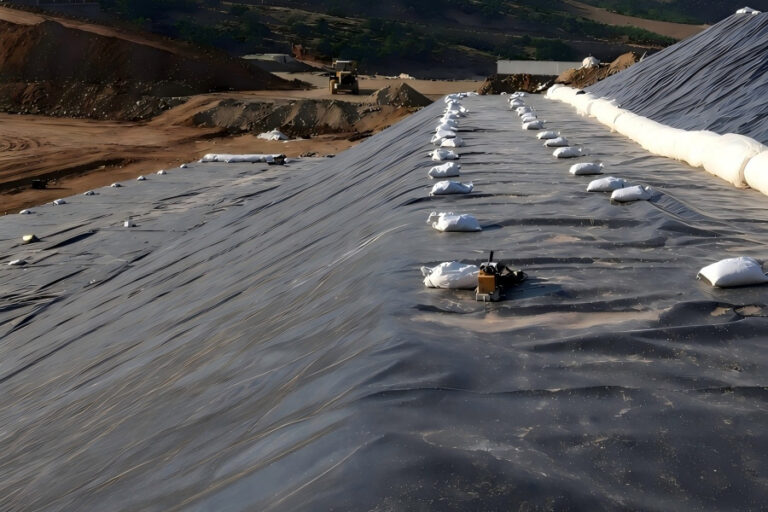
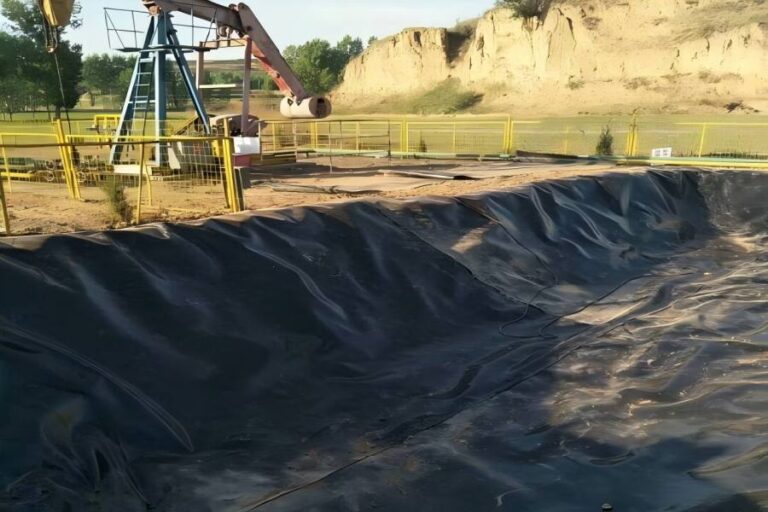
In landfill, tailings, and other environmental projects, the application is different. A geotextile fabric may be placed against a geomembrane to protect it from sharp stones or other materials during installation and backfilling. Here, the material acts mainly as a cushioning and protective layer.
These functions explain why geotextiles are used across such different engineering applications. The material itself may look simple, but its role changes according to where it is installed and what problem the design needs to solve.
Where Are Geotextiles Used?
Road and railway projects are common applications. When a geotextile is installed between soft subgrade soil and aggregate, it helps maintain separation and provides filtration while the drainage system remains functional.
Water conservancy projects have another set of requirements. In river restoration, embankments, dams, and shoreline protection, water is constantly moving through or around the soil structure. A properly selected geotextile can form part of the filtration layer, allowing water to escape while limiting soil loss.
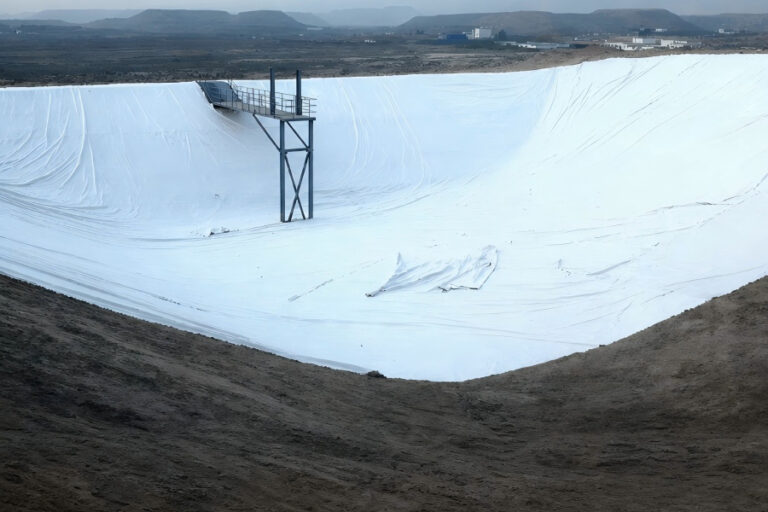
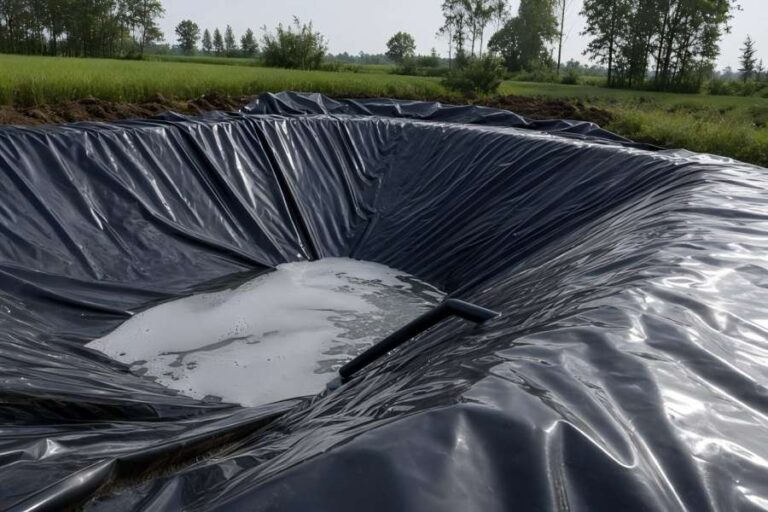
Environmental engineering projects also rely on these properties. In solid waste treatment and tailings storage, geotextiles can protect waterproofing layers from mechanical damage. Artificial lakes, constructed wetlands, underground pipe corridors, and other municipal projects may use them for drainage and soil separation.
There is no single specification suitable for all of these applications. Soil conditions, water movement, loading, installation conditions, and the function required from the material all affect the final selection.
What Should Be Checked Before Selecting a Geotextile? 🔍
The product specification should follow the engineering requirement rather than the other way around. Engineers normally need to look at mechanical properties and hydraulic properties together.
For filtration and drainage, apparent opening size and permeability are particularly relevant. Where the material will experience substantial loading or installation stress, tensile strength, elongation, puncture resistance, and tear resistance become more important. Material thickness and unit weight can also be useful reference values, but they should not be used as the only basis for selection.
Site conditions deserve the same attention. A geotextile installed over a rough foundation with sharp stones faces a different risk from one installed on a prepared fine-soil surface. The expected backfill material and construction method should also be considered before the product is finalized.
For large projects, discussing these conditions with the geotextile manufacturer during the design stage can help avoid selecting a material that looks suitable on paper but does not match the actual site.
Manufacturing Consistency Matters Underground
Geotextiles are often covered by soil, aggregate, concrete, or other construction materials after installation. Once the work is completed, replacing a damaged or inconsistent material can be difficult. Manufacturing quality therefore matters long after the product leaves the factory.
Jiantong controls the production process from raw material inspection through needle-punching and finished-product testing. The company pays particular attention to material uniformity and key performance indicators such as tensile strength, apparent opening size, and water permeability.
A stable production process helps reduce variations between rolls. For contractors working on large areas, consistency is important because the geotextile needs to perform as part of one continuous system rather than as a collection of individual rolls with different characteristics.
Installation Can Affect Long-Term Performance
Even a properly selected geotextile for geotechnical engineering can be compromised during installation. Sharp objects left on the foundation may puncture the fabric. Insufficient overlap can weaken the separation layer, while careless placement of aggregate can cause unnecessary mechanical damage.
The installation process normally requires attention to foundation preparation, roll placement, overlaps or sewn joints, and the method used to place backfill. These details are easy to overlook when the material is treated as a simple fabric rather than an engineered component.
Jiantong provides technical support alongside its geotextile products, helping customers consider material selection and installation requirements according to the project. The aim is to make sure the product specification and construction method work together.
Building a More Durable Geotechnical System
A geotextile rarely determines the performance of an entire project on its own. Its role is more practical: keep soil layers separated, allow water to pass, retain fine particles, provide additional support where required, and protect vulnerable materials during construction.
When these functions are incorporated into the design from the beginning, relatively small material and installation decisions can prevent much larger maintenance problems later. That is especially relevant for roads, embankments, waterways, environmental facilities, and municipal infrastructure where access for future repairs may be limited.
Jiantong focuses on geotextile fabric for these practical engineering requirements, combining short-fiber needle-punched production with quality control and technical support. By considering the material together with soil conditions, drainage requirements, loading, and construction methods, engineers and contractors can build a more reliable geotechnical protection system that is designed for long-term service rather than short-term installation.