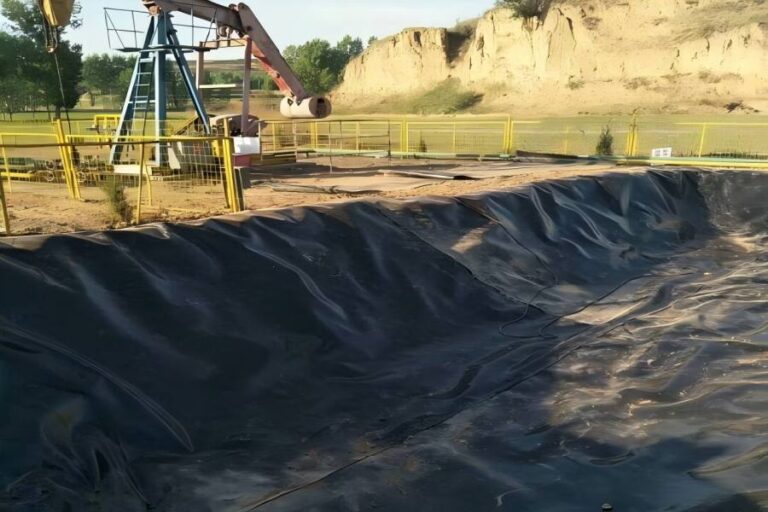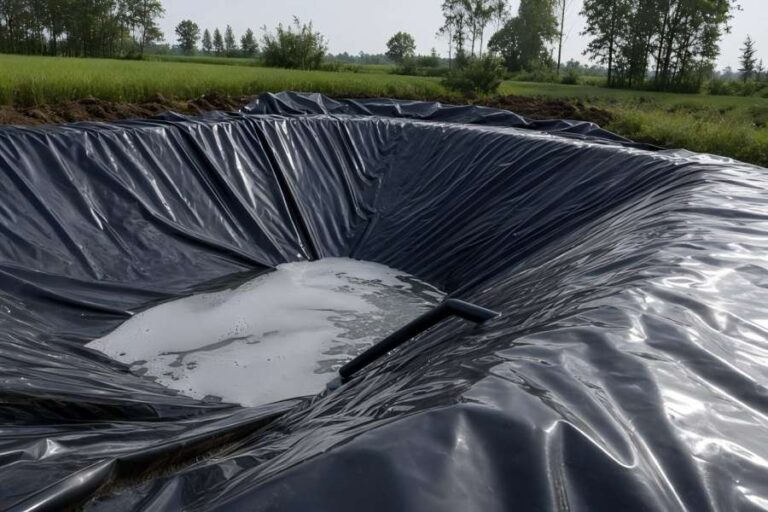

Material selection, foundation conditions, construction methods, and long-term environmental changes can all affect the performance of an anti-seepage system.
For many years, engineers have used geomembrane liners and geotextiles separately according to different project requirements. A geomembrane provides excellent waterproofing performance, while geotextile layers help with protection, filtration, and drainage. However, when projects become more complex, using only one type of material often creates limitations.
A pure geomembrane liner can effectively block water penetration, but during transportation, installation, and backfilling, sharp stones or uneven surfaces may cause puncture risks. A geotextile can protect the surface and improve soil stability, but it cannot replace the waterproof barrier required for anti-seepage applications.
This is why composite geomembrane has become increasingly common in modern engineering projects. By combining a geomembrane layer with one or more geotextile layers, it creates a more balanced structure that provides waterproofing, protection, and reinforcement at the same time.
As an experienced composite geomembrane manufacturer, Jiantong focuses on improving the material performance and manufacturing process behind this combined structure, helping customers deal with practical challenges in different engineering environments.

The Real Challenge Is Not Combining Materials, but Making Them Work Together
Many people understand composite geomembrane simply as “geomembrane plus geotextile.” However, the actual performance depends on much more than putting two materials together. The bonding strength between layers, the uniformity of the composite structure, and the ability of different materials to share external stress all directly influence service performance.
In some low-quality products, weak bonding between the membrane and fabric may lead to separation after long-term exposure to soil pressure, settlement, or repeated deformation. Once the protective layer becomes detached, the geomembrane surface becomes more vulnerable to mechanical damage.
Jiantong pays close attention to these details during production. By optimizing composite processing parameters, including temperature control, pressure adjustment, and material compatibility, Jiantong improves the bonding stability between the geomembrane and geotextile layers. The purpose is not simply to create a combined product, but to form a stable material structure that can maintain performance throughout the service life of an anti-seepage system.
Composite Geomembrane Provides Better Adaptability for Different Projects
Every engineering project has its own working conditions. A material suitable for a reservoir may not necessarily be the right choice for a landfill or transportation project. This is one reason why engineering teams increasingly prefer customized composite geomembrane solutions rather than standard materials with fixed specifications.
For water conservancy projects such as reservoirs, canals, and artificial lakes, the material needs to withstand continuous water pressure while adapting to possible foundation settlement. Good impermeability, tensile strength, and deformation resistance are key considerations.
For highways, railways, and embankment construction, the focus is often on preventing soil loss, improving separation performance, and protecting the waterproof layer from damage caused by construction materials.
For landfill sites, industrial containment areas, and environmental protection projects, the material must handle more demanding conditions, including chemical exposure and long-term environmental impact. In these applications, selecting suitable geosynthetic materials is essential for maintaining system stability.
Jiantong evaluates project conditions before recommending suitable material structures, helping customers avoid the common problem of using the same product for completely different applications.
Manufacturing Consistency Matters in Large-Scale Engineering Projects
For construction companies and project contractors, product quality is not only about laboratory performance. Consistency between different batches is equally important. A material that performs well in testing but varies significantly between production batches can create unnecessary risks during installation and project acceptance.
Jiantong controls quality throughout the entire production process. Raw materials are inspected before entering production, while manufacturing parameters such as thickness, weight, and composite uniformity are monitored during processing.
Finished products undergo performance checks, including tensile strength, peel strength, and permeability testing. Production records are maintained to ensure each batch can be traced back to its manufacturing process. This quality management approach helps ensure that every roll of geomembrane liner delivered to the construction site meets consistent performance requirements.

Why Technical Support Is Important After Material Selection
Choosing the right material is only one part of a successful anti-seepage project. Installation quality often determines whether the material can achieve its designed performance.
Problems such as improper welding, insufficient overlap width, or inadequate protection during backfilling may reduce the effectiveness of the entire system.
Jiantong works with customers during different project stages, from material selection and quantity planning to installation guidance. The technical team helps contractors understand key construction requirements and avoid common mistakes during installation. For engineering projects involving large areas and complex conditions, this type of technical support can help improve construction efficiency and reduce potential risks.
Jiantong: Developing Practical Solutions for Modern Anti-Seepage Engineering
As infrastructure projects continue to demand higher durability and environmental protection standards, the role of advanced waterproofing and reinforcement materials is becoming increasingly important.
With experience in composite geomembrane manufacturing, Jiantong continues to focus on improving material structures, production technology, and application solutions for different engineering conditions.
From water conservancy and transportation projects to environmental protection facilities, Jiantong provides anti-seepage materials designed to meet real construction requirements.
A successful anti-seepage system depends on the right material, the right application, and the right technical approach. Through continuous improvement in product quality and engineering support, Jiantong helps customers build more stable and durable protection systems.