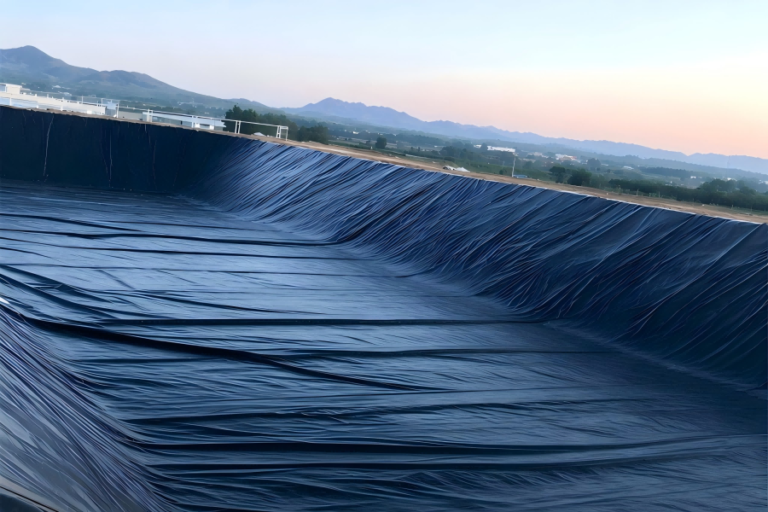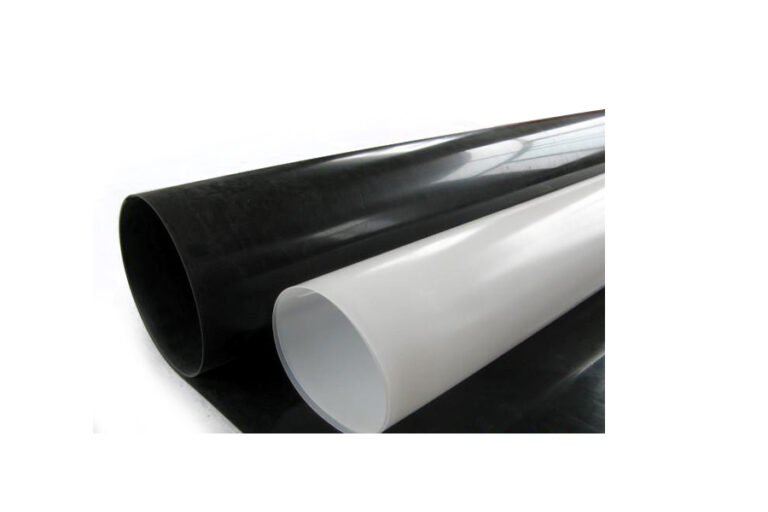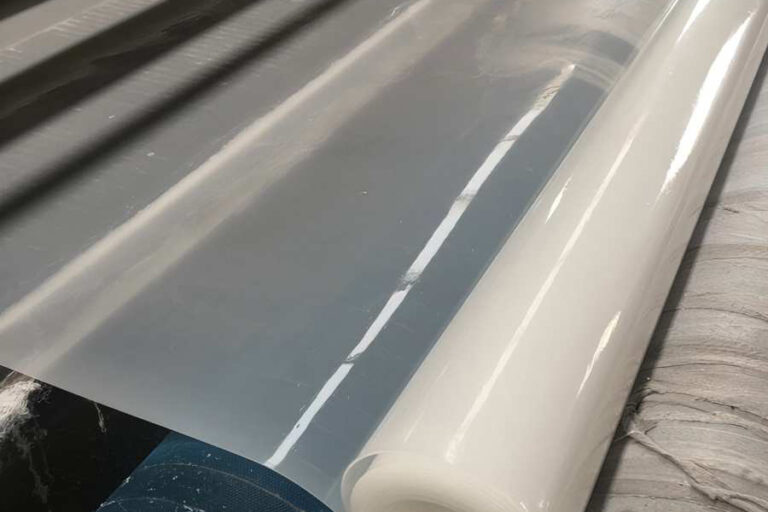

In large waterproofing projects, material selection involves more than choosing the right geomembrane. Roll width also affects installation planning, seam layout, labor requirements, and overall construction efficiency.
When contractors use narrow geomembrane rolls to cover large areas, they often need more overlaps and welded seams. Each additional seam requires careful installation and inspection. Poor welding or inadequate quality control can create potential leakage paths in the waterproofing system.
This is why geomembrane roll width deserves attention during project planning. Jiantong offers 6-meter-wide TPO geomembrane designed for large-area waterproofing and seepage control applications, helping contractors simplify material placement and reduce unnecessary joining work.
How Does Geomembrane Roll Width Affect Installation?
Roll width determines how much surface area a single sheet can cover. For large roofs, reservoirs, containment facilities, and other waterproofing structures, this directly influences the installation layout.
Wider geomembrane rolls can cover more area in each placement. Depending on the site dimensions and layout, they may reduce the number of adjacent panels and the amount of field seaming required.
Narrower rolls may remain practical for restricted spaces or complex structures. However, on extensive, relatively open surfaces, using wider rolls can simplify installation planning and reduce repetitive handling.
For contractors, the key consideration is not simply choosing the widest available material. It is selecting a roll width that suits the site geometry, installation equipment, access conditions, and seam arrangement.
Why Do Fewer Seams Matter in Waterproofing Projects?
Seams are essential to geomembrane installation because individual rolls must connect to form a continuous barrier. Their quality directly affects the integrity of the completed waterproofing system.
Every field seam requires proper preparation, suitable welding conditions, and appropriate inspection. On large projects, a high number of seams also increases the amount of work that installation teams must coordinate and check.
A wider geomembrane roll can help reduce the number of seams needed across a given area, although the actual reduction depends on the project layout and installation plan.
For TPO geomembrane, thermoplastic properties allow compatible sheets to be joined using suitable hot-air or thermal welding methods, subject to the product manufacturer’s instructions. Correct welding procedures and seam testing remain essential, regardless of roll width.
Fewer seams do not automatically guarantee a leak-free system. Contractors must still inspect the completed joints, address defects, and protect the installed membrane during subsequent construction.

How Can 6-Meter-Wide TPO Geomembrane Improve Project Efficiency?
For large waterproofing projects, repetitive material placement and seam preparation can consume considerable installation time. A wider roll can help reduce these repeated operations when site conditions allow continuous placement.
Jiantong’s 6-meter-wide TPO geomembrane addresses this practical requirement by combining a wide-format product with options for different application conditions.
Potential benefits include:
- Simplified panel layout: Wider rolls can cover more ground or roof area in each placement.
- Less repetitive seaming: Suitable layouts may require fewer connections between adjacent sheets.
- More efficient material handling: A planned installation sequence can reduce unnecessary repositioning and coordination.
- Better construction planning: Contractors can estimate panel arrangements and seam locations before work begins.
The actual time and labor savings depend on the total coverage area, site access, crew experience, welding equipment, and the complexity of the structure. Project teams should evaluate these factors before estimating productivity improvements.
Choosing the Right TPO Geomembrane for Different Applications
Roll width is only one part of material selection. The geomembrane structure, exposure conditions, substrate, and installation method must also match the project requirements.
Jiantong offers different 6-meter-wide TPO geomembrane configurations for specific construction needs.
Homogeneous TPO Geomembrane for Roof Waterproofing
Homogeneous TPO geomembrane can be considered for suitable building roof waterproofing applications. Project designers should verify the product’s specifications, substrate compatibility, drainage requirements, and installation details before selecting it.
Reinforced TPO Geomembrane for Demanding Applications
Reinforced products may be appropriate where the project design requires additional dimensional stability or reinforcement. Buyers should check the specified reinforcement structure and relevant mechanical performance requirements rather than relying on product descriptions alone.
Geotextile-Backed TPO Geomembrane for Subsurface Projects
TPO geomembrane with a geotextile backing may be suitable for selected tunnel, road, or subsurface waterproofing applications. The geotextile layer can provide separation or protection functions as designed, while the membrane forms the primary waterproofing barrier.
Self-Adhesive TPO Products for Renovation Work
Self-adhesive configurations may simplify certain renovation applications where the substrate and project conditions are compatible with the product. Contractors should confirm surface preparation requirements, adhesion suitability, and installation limitations before use.
The best option depends on the waterproofing design and site conditions. Specifying a product based on roll width alone can overlook important performance and installation requirements.
What Should Buyers Check Before Ordering Wide Geomembrane Rolls?
Before purchasing wide-width geomembrane, project teams should review several practical considerations.
First, confirm the coverage dimensions. Measure the installation area and plan panel placement to determine how the roll width affects overlaps, seams, and material waste.
Next, assess site access and handling. Wider rolls may require suitable lifting equipment, sufficient working space, and an installation crew familiar with handling large sheets.
Then, verify material and welding compatibility. Confirm the TPO geomembrane specifications, joining procedures, and inspection requirements before installation begins.
Finally, review quality documentation and technical support. Buyers should request relevant product specifications and inspection records. For complex projects, technical guidance on substrate preparation, seam welding, and protective layers can help reduce avoidable construction risks.
These checks help ensure that the selected geomembrane meets the project’s requirements rather than simply offering a convenient roll size.
Why Work with Jiantong for 6-Meter-Wide TPO Geomembrane?
For large waterproofing and seepage control projects, a suitable product needs to be supported by consistent manufacturing quality and practical application guidance.
Jiantong focuses on geomembrane production and provides 6-meter-wide TPO geomembrane options for applications including building roofs, tunnels, water conservancy projects, and environmental containment facilities.
Its production quality control process includes raw material inspection, thickness monitoring during manufacturing, and finished-product testing. Relevant checks may cover tensile properties, waterproofing performance, and aging resistance according to the applicable product specifications.
Jiantong also provides project-oriented technical support, helping buyers evaluate application conditions, select suitable product configurations, and understand key installation requirements.
For overseas buyers, contractors, and project procurement teams, confirming the required specifications and installation conditions before ordering is an important step toward achieving dependable waterproofing performance.
Make Roll Width Part of Your Waterproofing Strategy
Geomembrane roll width influences more than the amount of material delivered to a construction site. It affects panel layout, seam planning, installation coordination, and the work required to inspect the finished waterproofing system.
For large-area projects, 6-meter-wide TPO geomembrane can offer practical advantages by covering more area per sheet and potentially reducing field seaming. These benefits are most effective when the product configuration, installation method, and site conditions are properly matched.
Jiantong provides wide-width TPO geomembrane options and technical support for different waterproofing and seepage control applications.
If you are planning a large-area waterproofing project, contact Jiantong to discuss suitable geomembrane specifications, roll dimensions, and installation requirements for your application.