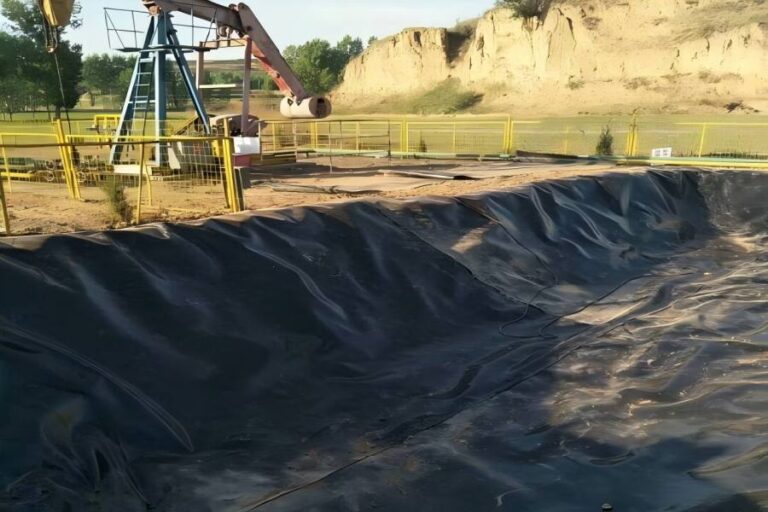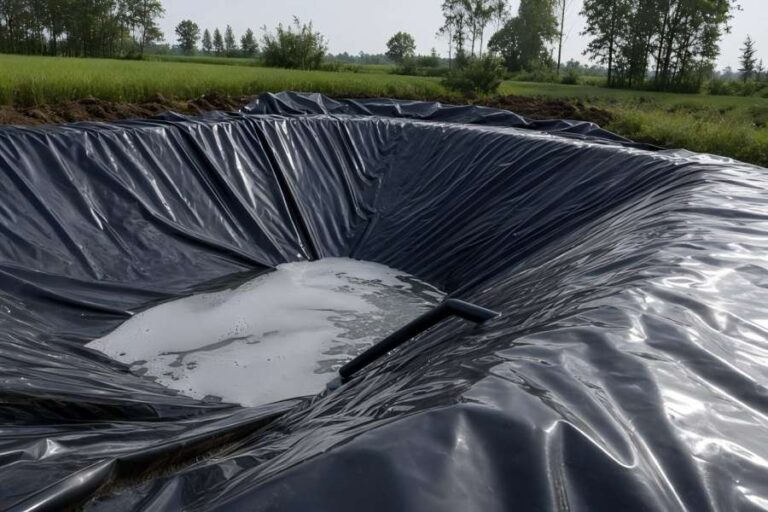

In many infrastructure, water conservancy, and environmental protection projects, the anti-seepage system is not always visible after construction, but it plays a critical role in ensuring the safety and durability of the entire project. Whether it is a reservoir, landfill, artificial lake, road foundation, or industrial containment area, the performance of waterproof materials directly affects the stability of the structure and the effectiveness of environmental protection measures.
For many years, traditional construction methods have relied on separately installing geomembranes and geotextiles. Although this method can achieve basic waterproofing performance, it often requires more installation procedures and creates additional challenges during construction. Differences in material positioning, uneven stress distribution, and possible movement between layers may gradually become potential risks during long-term operation.
A composite geomembrane integrates the waterproofing function of a geomembrane liner with the protection and reinforcement advantages of geotextile layers. This combined structure not only simplifies installation but also improves overall resistance against external pressure, soil movement, and mechanical damage.
As a professional composite geomembrane manufacturer, Jiantong focuses on developing geosynthetic materials based on actual engineering conditions. Instead of simply increasing production volume, Jiantong pays more attention to material performance, manufacturing consistency, and practical application requirements from construction sites.

The Bonding Quality Between Membrane and Fabric Determines Product Reliability
For composite geomembrane products, the connection between the geomembrane layer and geotextile layer is one of the most important factors affecting performance.
During engineering applications, the material may experience soil settlement, repeated external pressure, and contact with uneven construction surfaces. If the bonding strength between layers is insufficient, separation between the membrane and fabric may occur over time. Once the protective layer becomes detached, the geomembrane surface faces a higher risk of puncture damage, which can eventually lead to leakage problems.
Jiantong improves the stability of its composite production process by carefully controlling key manufacturing parameters, including processing temperature, pressure control, and bonding conditions. Through optimized production techniques and suitable material compatibility, the geomembrane and geotextile layers are firmly combined to achieve better overall performance.
This integrated structure allows different layers to work together when facing external stress. During long-term underground installation, the material can better adapt to deformation caused by soil pressure and environmental changes, helping maintain a stable anti-seepage barrier.
Composite Geomembrane Solutions Designed for Different Engineering Conditions
Different projects have different requirements for anti-seepage materials. A reservoir project may need to withstand continuous water pressure, while a landfill project requires stronger chemical resistance and environmental protection performance. Road and embankment projects often place more emphasis on puncture resistance and soil separation capabilities.
Jiantong provides application-oriented geomembrane liner solutions according to specific project conditions.
For water conservancy applications such as reservoirs, artificial lakes, and water storage facilities, the focus is placed on improving impermeability, tensile strength, and adaptability to foundation movement. These characteristics help the material maintain stable performance under long-term water exposure.
For highway foundations, embankments, and other transportation projects, composite geomembranes are designed to provide stronger protection against mechanical damage while improving filtration and isolation performance between soil layers.
For environmental engineering projects, including landfill sites and industrial containment areas, material selection focuses on chemical resistance, durability, and protection against potential contamination migration.
By considering actual working conditions rather than applying a standard solution to every project, Jiantong helps customers select more suitable materials for different engineering environments.
Strict Manufacturing Control Supports Stable Product Quality
For large-scale engineering projects, consistency between production batches is especially important. Even small variations in material performance can affect construction quality, project acceptance, and long-term operation.
Jiantong has established quality management procedures covering raw material selection, production monitoring, and final inspection.
Before production, incoming raw materials are carefully evaluated to ensure stable quality. During manufacturing, production equipment continuously monitors important parameters such as material thickness, weight, and composite uniformity. This helps reduce production fluctuations and maintain consistent product performance. Before shipment, finished products undergo inspection procedures including tensile strength testing, peel strength evaluation, and permeability testing. Each batch is recorded for quality tracking, ensuring that customers receive materials with stable and traceable performance.

More Than Materials: Technical Support Throughout the Project Process
In practical engineering projects, choosing the right material is only the first step. Proper installation methods and technical support also have a significant impact on the final anti-seepage performance.
Jiantong provides technical assistance from the early planning stage. Based on project requirements, site conditions, and construction drawings, the technical team helps customers select suitable materials and optimize installation plans.
During construction, guidance is provided for important procedures such as welding, overlapping, and protective layer installation, helping reduce problems caused by improper operation. After completion, Jiantong continues to provide technical communication and support when customers encounter questions during project use. This project-oriented service approach allows Jiantong to work together with contractors and engineering teams to improve the reliability of anti-seepage systems.
Building Long-Lasting Protection with Advanced Geosynthetic Materials
As infrastructure standards continue to improve, engineering projects require anti-seepage materials with better durability, adaptability, and stability. The role of composite geomembrane is becoming increasingly important in modern construction and environmental protection.
Jiantong continues to optimize manufacturing technology, improve product performance, and develop solutions based on real engineering needs. Through professional production capabilities and practical project experience, Jiantong provides dependable anti-seepage solutions for water conservancy, municipal construction, environmental protection, and transportation projects. With continuous innovation in geosynthetic materials, Jiantong aims to support safer and more sustainable infrastructure development through high-quality composite geomembrane products.