
Waterproofing and ground protection remain two of the most important challenges in hydraulic engineering, infrastructure construction, and environmental projects. A reliable barrier must do more than separate different soil layers. It also needs to withstand mechanical stress, control water movement, and maintain its performance throughout the service life of the project.
A conventional geotextile can provide separation, filtration, drainage, and reinforcement, but it does not always offer the level of impermeability required for demanding containment applications. A standalone geomembrane, on the other hand, provides excellent seepage control but may require additional protection against punctures and tears during installation.
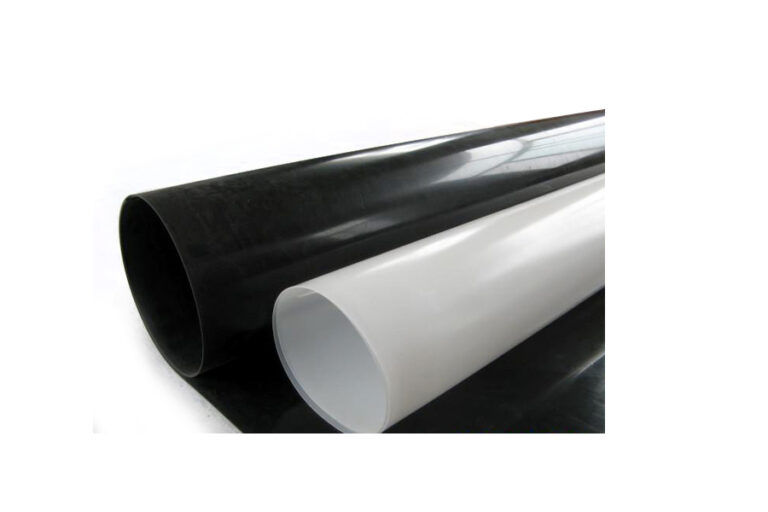
This is where composite geotextile becomes particularly useful. By combining a geotextile layer with a waterproof membrane, composite products can provide multiple functions within one engineered material. Jiantong develops composite geotextile solutions designed to address the practical requirements of water conservation, infrastructure, environmental protection, and other civil engineering projects.
Why Choose Composite Geotextile for Engineering Projects?
The main advantage of a composite geotextile lies in its combination of functions. Instead of relying on separate materials for waterproofing, protection, separation, and reinforcement, engineers can use a composite structure designed to address several requirements at the same time.
The membrane layer provides the primary waterproofing function. It creates a low-permeability barrier that helps control water and liquid migration. The geotextile layer adds mechanical protection and can also contribute to separation and reinforcement. This combination can simplify material selection and help create a more integrated waterproofing system. For projects with complex site conditions, composite geotextile for civil engineering can offer a practical balance between impermeability and mechanical protection.
Customized Composite Geotextile for Different Applications
Engineering conditions vary significantly from one project to another. A reservoir may experience long-term water pressure, while a highway embankment may face repeated loading and ground movement. A landfill can expose the liner to aggressive leachate, whereas an industrial site may require resistance to specific chemicals.
For this reason, Jiantong does not rely on a single fixed material configuration for every application. The company can adjust the geotextile weight, material structure, membrane thickness, and formulation according to project requirements.
Water Conservation and Reservoir Projects
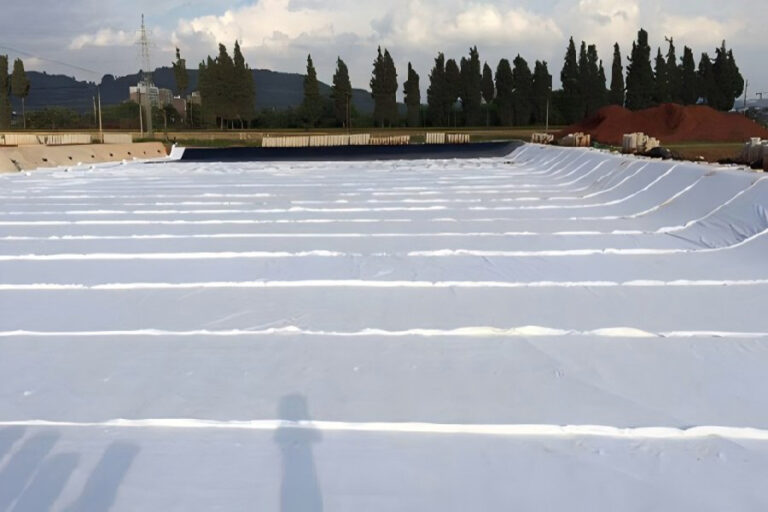
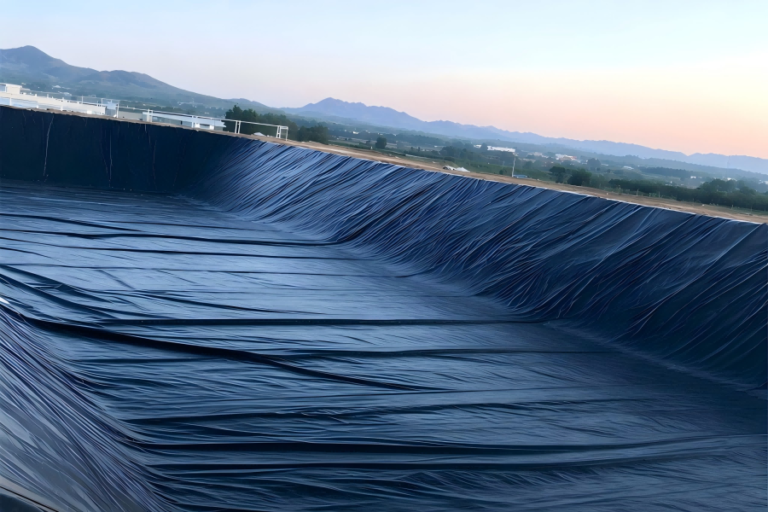
Reservoirs, water storage tanks, irrigation facilities, and artificial ponds require reliable seepage control. Long-term water pressure can place continuous stress on the waterproofing system.
A properly engineered composite geotextile liner can combine a low-permeability membrane with a protective geotextile layer. The composite structure helps control water loss while providing additional protection during installation and operation.
The reinforcement properties of the geotextile can also help the system accommodate certain levels of ground settlement and deformation.
Roads and Railway Infrastructure
Road and railway foundations require stable soil structures. Material migration between different soil layers can affect drainage, bearing capacity, and long-term pavement performance.
In these applications, composite geotextile can provide separation and reinforcement while helping manage water movement. The geotextile layer can reduce the mixing of different soil materials, while the waterproof layer helps control unwanted moisture migration.
This makes geotextile for civil engineering a useful component in selected roadbed and railway foundation systems.
Landfills and Environmental Protection
Landfills require effective containment to prevent leachate from migrating into surrounding soil and groundwater. The liner system must also withstand contact with complex liquids and potential mechanical damage.
A composite geomembrane or composite geotextile system can combine waterproofing performance with physical protection. The membrane limits liquid migration, while the geotextile layer helps protect the membrane from sharp particles and localized mechanical stress.
For environmental projects, material selection should consider leachate characteristics, site conditions, liner thickness, installation methods, and the overall containment system.
Chemical and Industrial Projects
Chemical facilities often handle liquids that can be aggressive toward construction materials. The waterproofing system therefore needs suitable chemical resistance as well as mechanical durability.
Jiantong can adjust material formulations according to the application environment. A suitable composite geotextile can help isolate industrial liquids from the underlying soil and provide additional protection for the waterproofing layer. Engineers should always evaluate the specific chemical medium before selecting a liner or membrane system.

Four Functions in One Composite Structure
A major reason engineers consider composite geotextile is its ability to combine several functions.
Waterproofing
The membrane layer provides the primary barrier against water and liquid migration. This makes composite materials suitable for projects where seepage control represents a critical requirement.
Protection
The geotextile layer helps protect the membrane from punctures, abrasion, and localized mechanical stress. This additional protection can be particularly valuable during construction.
Separation
Geotextile components can separate different soil or aggregate layers. This helps reduce material mixing and supports the stability of engineered structures.
Reinforcement
Depending on the product structure and project design, the geotextile layer can contribute to tensile performance and help the system accommodate certain deformation and loading conditions.
Together, these functions give composite geotextile an advantage in applications where a single-purpose material may not provide enough protection or versatility.
Quality Control Starts with Raw Materials
The performance of a composite geotextile depends on more than its design. Consistent raw materials and stable manufacturing processes also play an important role.
Jiantong maintains quality control throughout the production process. The company evaluates incoming raw materials before they enter manufacturing and monitors key parameters during composite production.
Important factors include material weight, thickness, temperature, pressure, and overall uniformity. Continuous monitoring helps reduce variations between production batches.
Before shipment, finished products undergo performance inspections. Depending on the product and application, testing can cover properties such as tensile strength, permeability, thickness, and aging resistance.
This approach helps ensure that each roll meets the required product specifications before delivery.
Installation Matters as Much as Material Selection
Choosing a suitable geotextile liner is only one part of a successful waterproofing project. Installation quality can directly affect the final performance of the system. The construction team should prepare the substrate carefully before placing the material. Sharp objects, large stones, and uneven surfaces can create unnecessary stress on the liner. Workers should also handle the rolls carefully during deployment. Proper overlap, welding, seam inspection, and protective layer installation can help maintain the integrity of the waterproofing system.
Jiantong supports customers with technical guidance during project implementation. The company can help evaluate application conditions, select suitable material specifications, and provide practical guidance for installation.
From Material Supplier to Project Solution Provider
Modern engineering projects often require more than a standard product catalog. Different sites have different conditions, and material selection needs to reflect the actual requirements of each project. Jiantong takes a project-oriented approach to composite geotextile solutions. Before production, its technical team can review project requirements and recommend suitable material structures. During production, the company can provide customized products based on agreed specifications. For installation, technical personnel can offer guidance and training when required. After delivery, Jiantong continues to provide technical support to help customers address application-related questions. This full-cycle approach allows the company to focus not only on supplying materials but also on helping customers achieve reliable waterproofing and protection performance.
How to Choose the Right Composite Geotextile?
The right product depends on the project rather than a single universal specification. Before choosing a composite geotextile, engineers should consider several factors.
First, identify the main function of the system. A water reservoir may prioritize impermeability, while a roadbed may place greater emphasis on separation and reinforcement.
Next, consider the surrounding environment. Chemical exposure, UV radiation, temperature changes, ground movement, and mechanical loads can all influence material selection.
The required membrane thickness and geotextile weight should also match the project design and installation conditions. A thicker or stronger material may provide additional protection in applications with higher mechanical demands.
Finally, installation requirements should form part of the material selection process. A well-designed product still needs proper handling, joining, inspection, and protection during construction.
A Reliable Material for Complex Engineering Needs
As infrastructure, environmental protection, water conservation, and industrial projects continue to develop, engineers face increasingly diverse waterproofing and protection requirements.
Composite geotextile offers a practical way to combine waterproofing, protection, separation, and reinforcement within one engineered structure. Its value becomes especially clear when a project needs both a reliable barrier and resistance to mechanical damage.
Jiantong continues to improve its composite geotextile materials, manufacturing processes, and technical services. By combining product customization with quality control and project support, Jiantong aims to provide dependable geosynthetic material solutions for demanding engineering applications.
For projects involving reservoirs, roads, railways, landfills, chemical facilities, aquaculture, and other civil engineering applications, selecting the right composite geotextile can help improve system reliability and support long-term project performance.