
The long-term stability of geotechnical structures depends on more than the strength of concrete or the quality of construction materials. Soil movement, water erosion, uneven settlement, and damage to waterproofing systems can gradually affect the performance of roads, embankments, slopes, and underground infrastructure. In many cases, these problems can be reduced through the proper selection and installation of geotextile.
As an essential geosynthetic material, geotextile helps separate soil layers, filter water, protect adjacent materials, and support ground stability. Choosing the right geotextile for geotechnical structures can help control soil loss, maintain drainage performance, and extend the service life of infrastructure projects.
Jiantong provides geotextile products for road construction, water conservancy, environmental protection, and other civil engineering applications. Understanding the functions and selection criteria of geotextile helps engineers, contractors, and buyers make more informed decisions for long-term project performance.
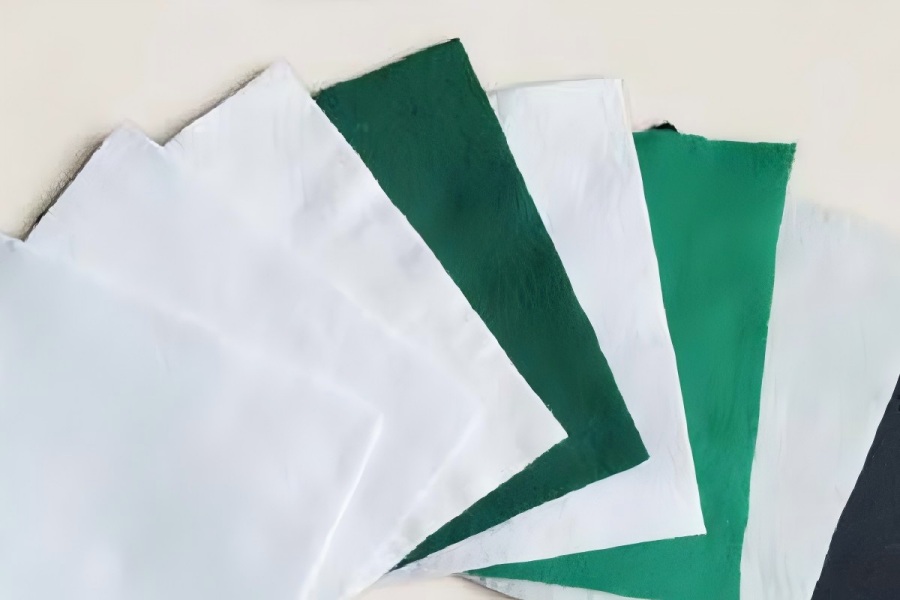
How Does Geotextile Improve Geotechnical Stability?
The main functions of geotextile include separation, filtration, drainage, and protection. Depending on the material properties and engineering design, certain products may also contribute to reinforcement.
Geotextile Separation: Maintaining Soil Layer Integrity
In road construction, soft subgrade soil can mix with the aggregate base under repeated traffic loads. This contamination may reduce the effectiveness of the base layer and contribute to uneven settlement.
Geotextile for road construction creates a separation layer between the subgrade and aggregate, helping prevent different soil materials from mixing. By maintaining the integrity of the designed layers, geotextile supports more stable road foundations and can reduce maintenance requirements under suitable site conditions.
Geotextile Filtration and Drainage: Controlling Water and Soil Movement
Water flowing through soil can carry fine particles into drainage systems or away from protected slopes. Over time, this may cause soil loss, drainage blockage, or localized instability.
Geotextile filtration allows water to pass through while retaining soil particles within the limits required by the engineering design. This function is important in drainage systems, retaining structures, riverbanks, and reservoir slopes.
Properly selected geotextile drainage materials can help maintain water flow and reduce the risk of fine particles clogging drainage layers. However, filtration performance depends on soil grading, fabric opening size, permeability, and hydraulic conditions. Product selection should therefore be based on the actual soil and water conditions rather than fabric weight alone.
Geotextile Protection: Safeguarding Waterproofing Materials
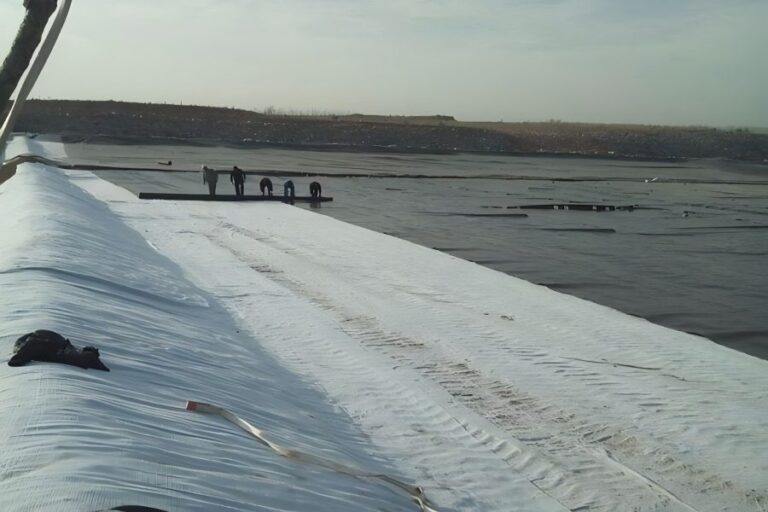
In landfills, reservoirs, and containment projects, geomembranes may be exposed to concentrated pressure from stones or uneven surfaces. Without a suitable protective layer, punctures or abrasion can compromise the waterproofing system.
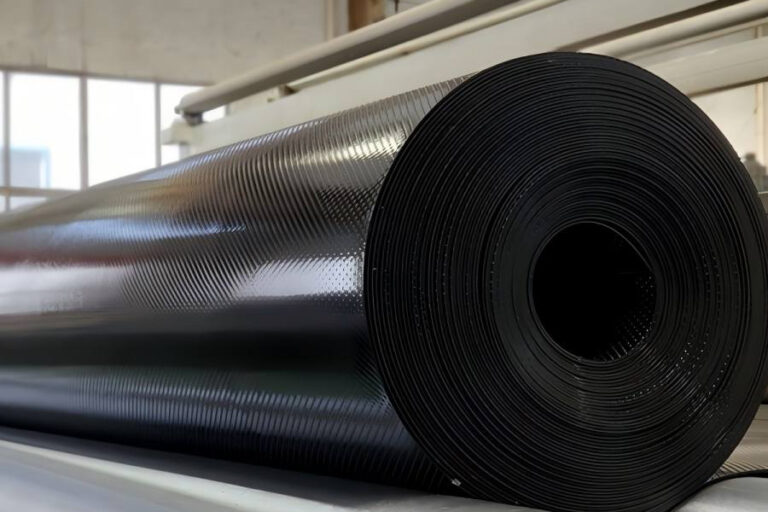
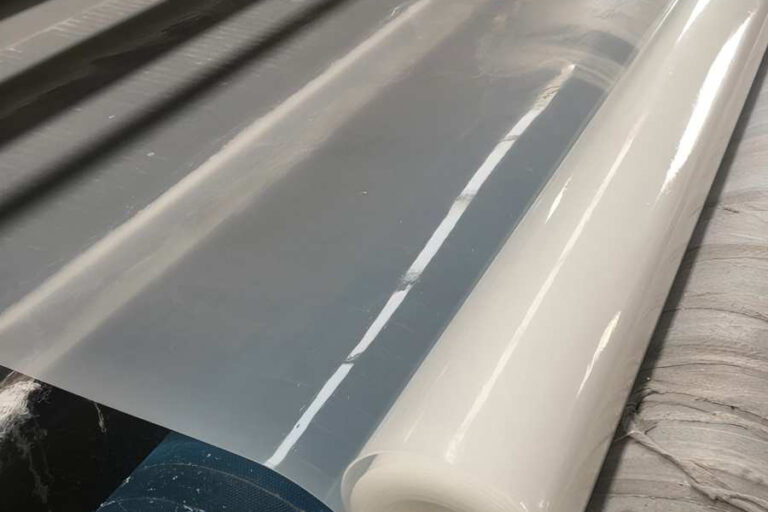
Geotextile protection helps cushion geomembranes and distribute localized contact stresses. For projects involving landfill liners or other containment systems, the selected geotextile should provide suitable puncture resistance, thickness, and durability for the expected loading conditions.
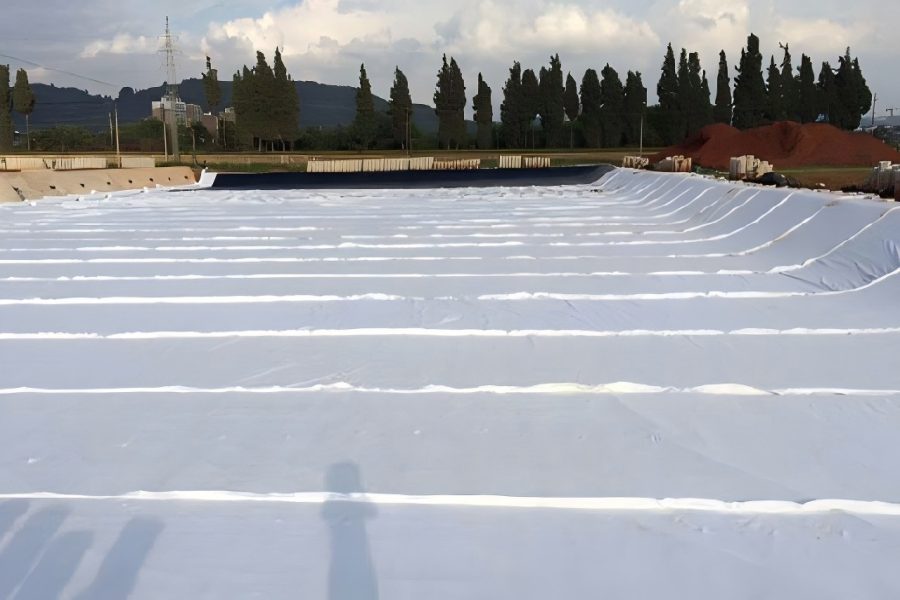
Where Is Geotextile Used in Civil Engineering Projects?
Different applications require different combinations of filtration, separation, drainage, and protection. Selecting geotextile according to the intended function helps ensure that the material performs effectively within the overall engineering system.
Road construction and railway foundations
Geotextile for road construction is commonly installed between soil subgrades and granular base layers. It helps prevent soil mixing and supports the stability of the road foundation, particularly where weak or moisture-sensitive soils are present. The required tensile strength and durability depend on the project design and construction conditions.
Riverbanks, reservoirs, and slope protection
In hydraulic engineering, geotextile for slope protection acts as a filter beneath riprap, concrete blocks, or other protective layers. It allows water to pass while helping retain the underlying soil, reducing the risk of erosion and soil loss caused by water movement.
Landfills and environmental containment
Geotextile for landfill applications may be used to protect geomembranes, provide filtration, or form part of a drainage system. The appropriate specification depends on the liner design, contact materials, loading conditions, and environmental exposure.
Municipal drainage and ecological restoration
Geotextile is also used in underground drainage, artificial wetlands, ponds, and landscaping projects. In these applications, it can help separate soil materials, manage water movement, and protect adjacent components. The required permeability and soil retention characteristics vary according to the site conditions.
What Determines Geotextile Quality and Service Life?
The long-term performance of geotextile depends on its material properties, manufacturing consistency, and compatibility with the surrounding soil and construction environment.
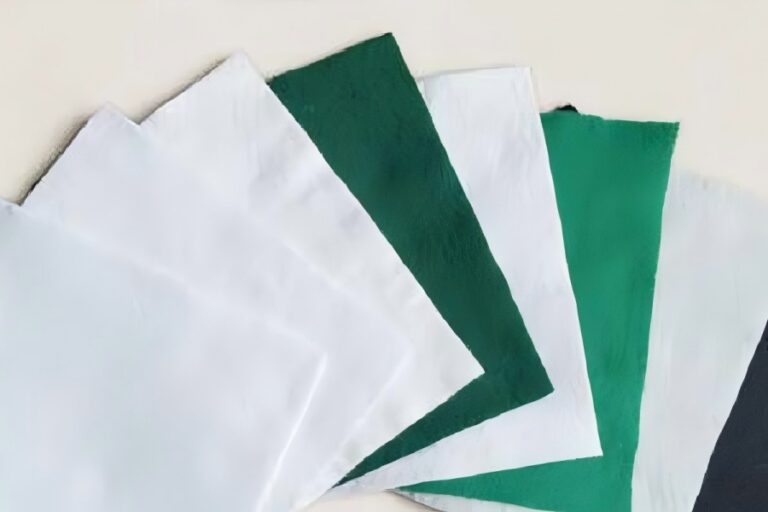
Needle-punched nonwoven geotextile is produced by mechanically entangling fibers to form a permeable fabric. This structure is commonly used for filtration, separation, drainage, and cushioning applications. However, different geotextile products have different performance characteristics, so specifications should match the intended engineering function.
When evaluating geotextile quality, buyers should consider:
- Tensile strength and elongation: Relevant to mechanical loads and installation conditions.
- Puncture and tear resistance: Important when the fabric contacts coarse aggregate or uneven surfaces.
- Apparent opening size: Helps determine whether soil particles can be retained while water passes through.
- Permeability and permittivity: Indicate the fabric’s capacity to transmit water under specified conditions.
- Mass per unit area and thickness: Useful specification parameters, but neither alone guarantees overall performance.
- Durability: Important for projects exposed to demanding soil, chemical, or environmental conditions.
Jiantong manages raw material selection and needle-punching production processes, with quality checks covering relevant mechanical and filtration properties. For buyers comparing products from different suppliers, verified test results and compliance with project specifications are more useful than price or weight alone.
Why Choose a Reliable Geotextile Manufacturer and Supplier?
Choosing a reliable geotextile manufacturer involves more than comparing product prices. Consistent material quality, suitable product specifications, and dependable technical support all influence project outcomes.
An experienced geotextile supplier should be able to provide relevant product data and help buyers identify materials suited to the intended application. For example, road foundation projects may prioritize separation performance and mechanical durability, while landfill protection systems may require greater attention to puncture resistance and compatibility with geomembranes.
Installation is equally important. Before laying geotextile, contractors should prepare the surface and remove sharp debris. Roll placement, overlaps, seams, and backfilling should follow the approved construction specifications. Poor installation can damage the fabric or compromise its filtration and separation functions, even when the original product meets the required standards.
Jiantong combines geotextile manufacturing with application-oriented technical guidance. By considering site conditions, soil properties, water flow, and loading requirements, the company helps project teams identify suitable product specifications and address common installation concerns.

How to Choose the Right Geotextile for Your Project
Before purchasing geotextile, engineers and contractors should identify the primary function required: separation, filtration, drainage, protection, or a combination of these functions.
Next, assess the soil type, groundwater conditions, external loads, contact materials, and expected service environment. Request technical data for the properties most relevant to the project, and verify that the product meets the applicable engineering specifications.
Working with a qualified geotextile manufacturer or supplier can also help clarify product options, testing requirements, and installation considerations. The goal is not simply to select a material with a higher weight or thickness, but to choose a geotextile that performs reliably under the actual project conditions.
Jiantong Geotextile for Long-Term Infrastructure Performance
From road foundations and slope protection to drainage systems and environmental containment, geotextile plays an important role in maintaining the performance of geotechnical structures. Its effectiveness depends on matching the material’s properties to the engineering requirements and installing it correctly.
Jiantong continues to refine its geotextile manufacturing processes and quality management to support infrastructure, water conservancy, environmental protection, and municipal engineering projects. By combining product quality control with practical technical support, Jiantong aims to provide dependable geotextile solutions for long-term geotechnical stability.
Selecting the right geotextile helps protect soil layers, manage water movement, and reduce damage to adjacent materials. For engineers, contractors, and procurement teams, working with a capable manufacturer and supplier is an important step toward building more durable and reliable infrastructure.