|JIANTONG Group
Integrated Geosynthetic Solutions Partner
Jiantong Group

News & Updates
Company News Industry Frontiers · Technical Insights
Contact Us
Phone : +86 15216773278
Email: inquiry@jiantong360.com
Address:
Middle Section, Wuyou Street, An’de Subdistrict, Lingcheng District, Dezhou City, Shandong Province, China

Why Does HDPE Geomembrane Quality Matter in Long-Term Containment Projects?
On a containment project, the materials that attract the most attention are not always the ones that matter most in the long run. A geomembrane often disappears beneath protective layers, soil, or other construction materials once installation finishes. Years later, however, its performance can make a significant difference to the entire project.
Consider a landfill lining system. The liner must contain leachate while facing chemical exposure, changes in ground conditions, and long periods of service. A similar challenge exists in mining facilities, wastewater treatment plants, and water storage projects. In each case, the geomembrane needs to match the conditions it will face after construction.
This is where material selection deserves more attention. A low quotation may look attractive during procurement, but the initial purchase price tells only part of the story. Buyers also need to consider product consistency, mechanical properties, durability, and the quality of the manufacturer’s technical support.
For Jiantong, these are important considerations when discussing HDPE geomembrane solutions with engineering buyers. The objective is straightforward: help customers select a material that fits their project rather than simply choose a product based on its nominal thickness or price.
A Good Geomembrane Starts Before It Reaches the Construction Site
The quality of an HDPE geomembrane depends on decisions made long before a roll leaves the factory.
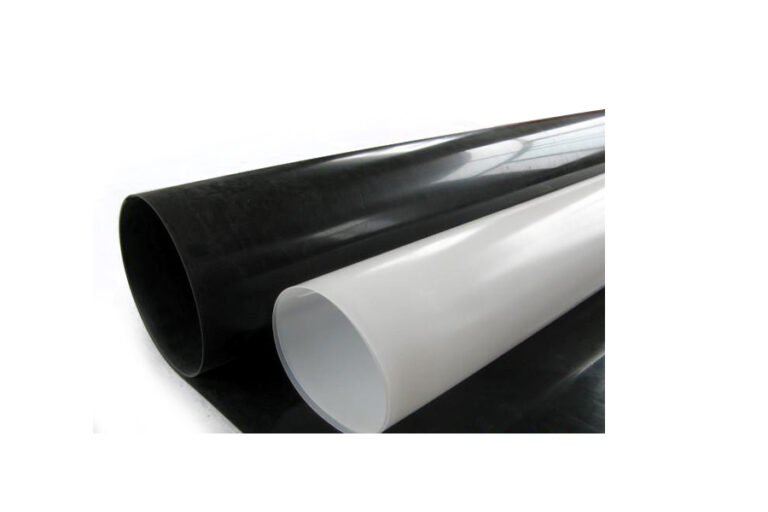
Polyethylene resin forms the basis of the material, while the formulation and manufacturing process influence its final properties. If raw materials vary significantly or production conditions fluctuate, the finished product may show differences in thickness, mechanical performance, or durability.
These issues are not always obvious during a visual inspection. Two rolls can look almost identical while delivering different results in laboratory tests. That is why buyers should look beyond appearance when evaluating an HDPE geomembrane manufacturer.
Product specifications and quality records provide a more reliable starting point. Depending on the project, buyers may need information about thickness, tensile properties, elongation, puncture resistance, and durability-related indicators. The relevant requirements should come from the project design and applicable standards, not from a general product description.
It is also worth asking how a supplier manages production batches and records inspection results. Clear documentation helps buyers connect the material they order with the product delivered to the site.
For contractors working on large containment projects, this kind of preparation can save considerable time. It makes technical comparisons more straightforward and reduces the risk of discovering a specification mismatch after delivery.
What Happens When the Geomembrane Meets Real Site Conditions?
A factory floor offers controlled conditions. A construction site does not.
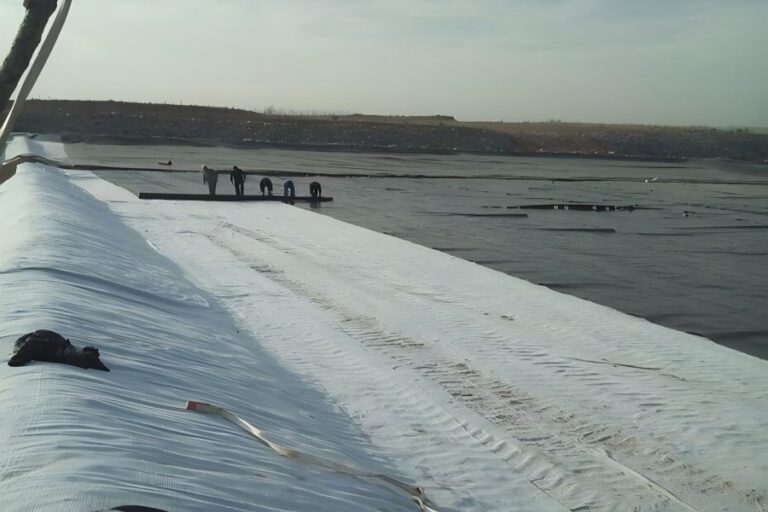
Workers may need to spread large geomembrane sheets across slopes, around structures, or over prepared ground that still presents installation challenges. Sharp particles, uneven surfaces, careless handling, and construction traffic can all place stress on the material.
This is why mechanical properties matter. Tensile strength indicates how the material responds to pulling forces, while elongation at break helps describe how far it stretches before failure. Puncture resistance provides additional information about its response to localized loading.
No single measurement tells the whole story. Engineers need to assess these properties together and compare them with the demands of the application.
Ground movement adds another consideration. Some sites experience differential settlement, which can place tensile stress on the liner. A geomembrane with suitable mechanical characteristics may accommodate a degree of deformation, but the actual response also depends on the subgrade, liner thickness, installation details, and the amount of movement.
In practice, material selection and site preparation need to work together. Even a high-quality HDPE geomembrane liner cannot compensate for a poorly prepared subgrade. Contractors should remove sharp objects, address surface irregularities, and provide protective layers where the design calls for them.
For buyers, the practical question is not simply whether a geomembrane is strong. It is whether its documented properties suit the conditions at the project site.
Chemical Resistance Is Only Part of the Long-Term Performance Question
Landfills and industrial containment facilities place particular demands on liner materials. Leachate, wastewater, and mining residues may contain substances that require careful consideration during material selection.
HDPE geomembranes generally offer good resistance to many acids, alkalis, and salt solutions. However, chemical compatibility depends on the substances involved, their concentrations, operating temperatures, and exposure conditions.
A product that performs well in one application may not suit every chemical environment. Buyers should therefore identify the expected exposure conditions before selecting a specification. Where the project involves aggressive or complex chemical mixtures, engineers should review relevant compatibility information and seek specialist advice.
Outdoor exposure presents a different challenge. Sunlight, temperature fluctuations, and oxidation can gradually affect polymer materials. Manufacturers commonly incorporate carbon black and suitable stabilizing additives to improve resistance to UV exposure and oxidative degradation.
For projects with demanding durability requirements, buyers may need to review carbon black content and dispersion, oxidative induction time (OIT), and other tests specified by the applicable standard.
These results help assess material quality, but they should not be interpreted as a guarantee of a fixed service life. Actual performance depends on the formulation, installation quality, environmental conditions, and the way the complete containment system operates.
A landfill liner and a water storage pond, for example, may both use HDPE geomembrane, yet their design requirements can differ considerably. The right choice starts with understanding the application.
The Weakest Point May Be the Seam, Not the Sheet
Anyone familiar with geomembrane installation knows that joining the sheets requires as much attention as selecting the material itself.
Large containment areas usually require multiple sheets, and each joint becomes part of the overall barrier system. If a seam fails, the quality of the surrounding material cannot prevent leakage through that defect.
Thermal fusion welding is widely used to join HDPE geomembrane sheets. The installer must prepare the surfaces correctly and control the welding parameters according to the approved procedure. Equipment settings, weather conditions, operator skill, and material handling can all influence the result.
A smooth-looking weld is not sufficient evidence of a sound joint. Contractors should follow the project’s inspection plan and use the appropriate testing methods to verify seam integrity.
Depending on the project specification, quality control may include nondestructive testing and destructive testing of selected seam samples. These procedures help identify defects and provide evidence that the installation team has followed the required standards.
This is also an area where communication between the supplier and contractor matters. Buyers should clarify material specifications, welding requirements, and inspection arrangements before installation begins. Resolving these details early is generally easier than dealing with a problem after the liner has been covered.
For an HDPE geomembrane supplier, understanding the relationship between material performance and installation requirements is an important part of supporting engineering customers.
Choosing an HDPE Geomembrane Manufacturer: Look Beyond the Quotation
Price will always matter in procurement, especially when a project requires a large quantity of geomembrane. However, comparing quotations makes sense only when the products meet comparable technical requirements.
Start by checking the specifications. Confirm the nominal thickness, roll dimensions, relevant performance indicators, and applicable standards. If two suppliers quote different specifications, their prices may not provide a meaningful comparison.
Next, review the quality documentation. Ask which tests the manufacturer performs, which standards it follows, and whether the available reports relate to the product or batch under consideration. For projects with strict acceptance requirements, agree on inspection arrangements before production or shipment.
Production consistency also deserves attention. A supplier should be able to explain how it manages raw materials, monitors product dimensions, and records inspection results. These details help buyers evaluate the company’s quality control process instead of relying entirely on marketing claims.
Finally, consider the practical side of cooperation. Roll dimensions, packaging, delivery schedules, and technical communication can all affect construction planning. For large projects, a supplier that responds clearly to specification questions can make procurement and installation coordination much easier.
Jiantong provides HDPE geomembrane solutions for different engineering applications. Buyers can discuss their intended use, required specifications, and relevant quality documentation with the company before finalizing an order.
The important point is to establish what the project needs first, then evaluate suppliers against those requirements.
Where Does HDPE Geomembrane Make the Biggest Difference?
The material appears in many types of infrastructure, but each application places different demands on the liner.
In landfill projects, the geomembrane forms part of a containment system designed to control leachate migration. Chemical compatibility, seam quality, and protection against installation damage all matter.
In mining and tailings facilities, engineers may need to consider process water, chemical exposure, subgrade conditions, and the consequences of leakage. The project specification should reflect the actual operating environment.
For reservoirs, canals, and water storage ponds, the liner helps reduce seepage. Roll layout, slope conditions, and construction details can influence installation efficiency and overall performance.
In wastewater treatment facilities, the choice depends on the wastewater characteristics, operating temperature, and other site-specific conditions. Buyers should verify that the selected material meets the relevant requirements.
These applications share a common principle: a geomembrane should be selected for the job it needs to perform. There is no single thickness or product specification that automatically suits every containment project.
A Better Choice Begins with the Right Questions
A geomembrane may be hidden from view once construction finishes, but its role does not become less important. The quality of the raw materials, consistency of production, mechanical properties, chemical compatibility, and integrity of field seams all contribute to the performance of the finished system.
For buyers, a sensible approach is to define the project requirements early, review the relevant test reports, and confirm how the supplier’s product matches the intended application. Proper site preparation and qualified installation teams remain essential, even when the material meets every specified requirement.
Jiantong works with buyers to discuss HDPE geomembrane specifications for different engineering applications. If you are planning a landfill, mining containment, water storage, or wastewater treatment project, visit Jiantong to explore its product solutions and discuss your technical requirements.
Choosing the right geomembrane is not about finding the most impressive product description. It is about understanding the conditions the material will face and selecting a solution that meets those demands.