
Choosing a geomembrane is not simply a matter of comparing prices or selecting a particular thickness. For projects such as landfill construction, reservoir lining, water conservancy, aquaculture, and wastewater treatment, the quality of the geomembrane directly affects the reliability of the entire containment system.
A product that looks good on paper may not perform as expected if the raw materials are inconsistent, the manufacturing process is poorly controlled, or the installation is carried out incorrectly. Once leakage occurs, the cost of repairs, additional labor, and construction delays can quickly outweigh any initial savings.
So, how do you choose a reliable geomembrane? Start by understanding your project requirements, then evaluate the product, the manufacturer, and the technical support available after delivery. These factors matter far more than price alone.
As a professional geomembrane manufacturer, Jiantong works with customers to provide practical lining solutions for different engineering applications, with a focus on product quality, manufacturing consistency, and on-site technical support.
1. Start with the Application, Not the Price
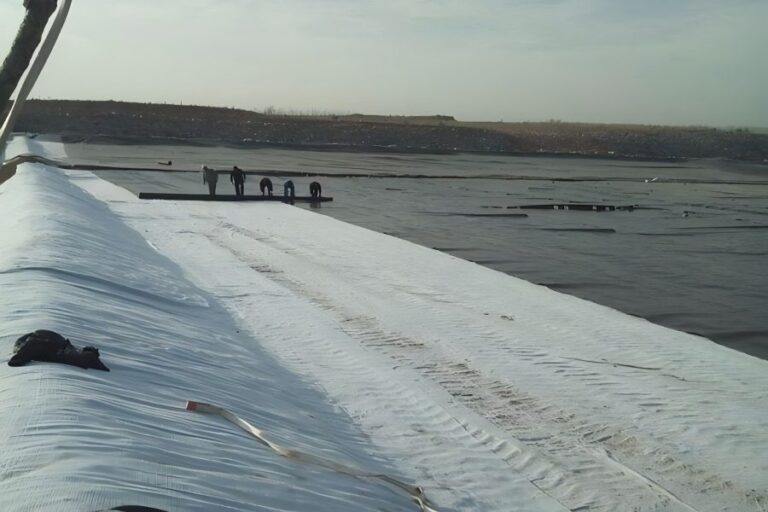
Before comparing geomembrane suppliers, consider where the material will be installed and what conditions it must withstand. A geomembrane used in a landfill faces different challenges from one installed in an aquaculture pond or a water storage reservoir.
For example, landfill projects require careful consideration of chemical compatibility, puncture resistance, and seam integrity. Reservoirs and canals place greater emphasis on seepage control, foundation conditions, and long-term exposure to the elements. Aquaculture ponds require a suitable lining material that can maintain water containment under the conditions of the specific operation.
The most suitable geomembrane depends on several factors:
- The type of liquid or waste being contained
- Soil conditions and the risk of puncture
- Exposure to sunlight, temperature changes, and weather
- The expected service life of the project
- Installation conditions and the required inspection procedures
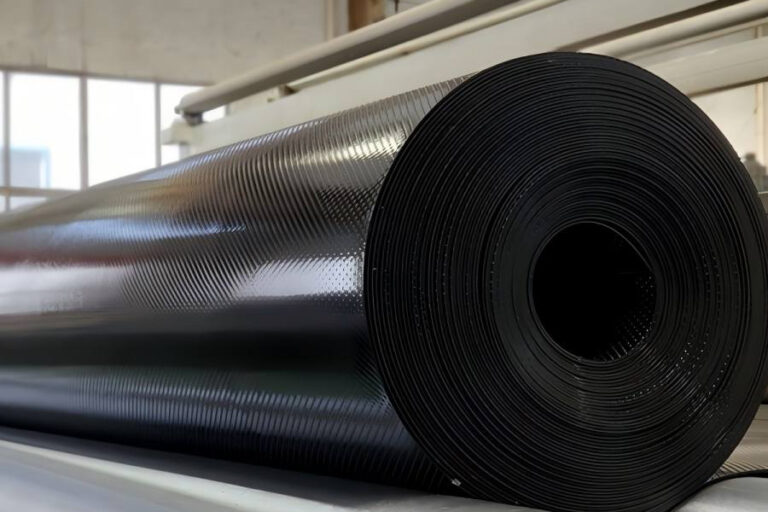
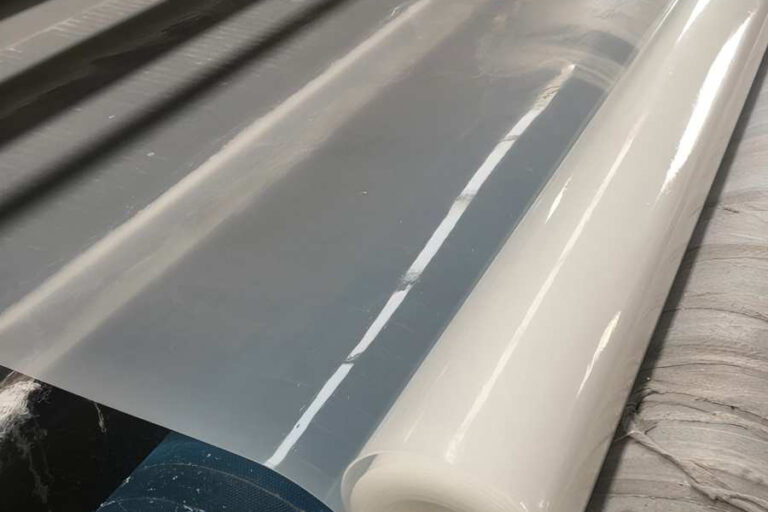
HDPE geomembrane is widely used in landfill liners, reservoirs, wastewater treatment facilities, and other containment applications because of its low permeability and resistance to many chemicals. LLDPE geomembrane may be preferable where greater flexibility is needed to accommodate irregular surfaces or certain forms of ground movement.
Neither material is automatically the best choice for every project. The final selection should follow the engineering design, relevant material specifications, and actual site conditions.
2. Look Beyond Thickness When Comparing Geomembrane Quality
Thickness is often one of the first specifications buyers compare. While it is important, it does not tell the whole story.
Two geomembranes with the same nominal thickness can have different mechanical properties and long-term performance. Raw material quality, material formulation, manufacturing conditions, and quality control all contribute to the finished product.
When evaluating a geomembrane, pay attention to the following characteristics.
Tensile strength and elongation
These properties indicate how the material responds to tension and deformation. They should be assessed against the requirements of the application rather than considered in isolation.
Puncture resistance
Construction debris, sharp particles, uneven subgrades, and equipment movement can damage a geomembrane. Proper foundation preparation and protective layers are also important, particularly in demanding containment projects.
Chemical resistance
For landfills, industrial wastewater facilities, and mining applications, the geomembrane must be compatible with the substances it will encounter. Material selection should account for the actual chemical composition and operating conditions.
Resistance to environmental aging
Geomembranes exposed to sunlight and temperature fluctuations need suitable durability characteristics. For exposed installations, UV resistance and oxidative stability deserve particular attention.
Consistency between production batches
A reliable product should meet its specified requirements consistently. Uniform dimensions, stable material properties, and suitable surface conditions also make installation and seam welding more predictable.
Jiantong focuses on material development and production process optimization to meet the different performance requirements of geomembrane applications. For buyers, the practical point is straightforward: request technical data and relevant test reports instead of relying on general claims about product quality.
3. Choose a Manufacturer That Controls Its Production Process
The quality of a geomembrane begins long before the finished roll leaves the factory. Raw material selection, production parameters, and inspection procedures all influence the final result.
This is one reason it is worth looking beyond the supplier’s quotation. A trading company may be able to supply the required product, but a manufacturer with direct production capabilities can often provide clearer information about manufacturing conditions, production scheduling, and product specifications.
Before placing an order, ask the supplier:
- How are incoming raw materials inspected?
- How are production parameters monitored?
- Are finished products tested against the agreed specifications?
- Can the manufacturer provide batch identification and inspection records?
- Can production capacity meet the project’s delivery schedule?
These questions are particularly important for large projects, where material consistency and delivery coordination can affect the construction schedule.
As a source geomembrane manufacturer, Jiantong maintains its own production and testing capabilities, allowing the company to manage key stages of manufacturing and product inspection directly. This integrated approach supports closer control over product consistency and helps simplify communication between the manufacturer and the project team.
For buyers, working directly with a geomembrane factory can also make it easier to discuss technical requirements, coordinate orders, and resolve product-related questions before they become problems on site.
4. Ask for a Clear and Traceable Quality Control Process
A manufacturer’s quality assurance system should cover more than the final inspection. Reliable quality management starts with incoming raw materials and continues through production, testing, shipment, and, where applicable, installation.
For engineering projects, traceability is especially valuable. If a problem arises, the project team needs to know which product batch was supplied, what inspections were completed, and how any installation defects were handled.
A well-managed quality control process should cover:
| Stage | What buyers should look for |
|---|---|
| Raw material inspection | Appropriate material specifications and incoming inspection records |
| Production | Controlled manufacturing parameters and production documentation |
| Finished-product testing | Test results for relevant physical and mechanical properties |
| Pre-shipment inspection | Verification of product specifications and appearance |
| Installation | Records of panel placement, seam welding, and repairs |
| Final acceptance | Seam inspection results and applicable quality documentation |
The specific tests will depend on the geomembrane type and project requirements. They may include thickness measurements, tensile testing, puncture testing, and other relevant evaluations.
Jiantong emphasizes traceability throughout its quality management process, from raw material selection and production to finished-product inspection and installation records. This gives customers a clearer basis for checking product conformity and preparing the documentation required for project acceptance.
When evaluating a supplier, ask to see the actual documentation. A clear inspection report and a consistent testing process provide more useful evidence than a general promise of high quality.
5. Understand the True Cost of a Geomembrane Project
Price matters, particularly when purchasing geomembranes for large areas. However, the lowest quotation does not necessarily represent the lowest project cost.
Consider what happens when an unsuitable product causes installation difficulties or a welded seam fails inspection. The project may require additional labor, replacement materials, repeated testing, or repairs after the liner has already been covered by other construction layers.
These costs can be difficult to recover once the project is underway.
A more useful comparison considers the total cost of the installed system, including:
- Geomembrane purchase and transportation
- Subgrade preparation and protective materials
- Installation labor and seam welding
- Quality inspection and leak detection
- Potential repair and maintenance costs
This does not mean that the most expensive geomembrane is always the best option. It means the product should meet the technical requirements without introducing unnecessary performance or installation risks.
Jiantong takes a quality-focused approach to geomembrane manufacturing and project support rather than competing on price alone. By coordinating product supply with technical assistance and inspection support, the company aims to help customers avoid preventable problems and manage project costs more effectively.
6. Do Not Overlook Installation and Welding Support
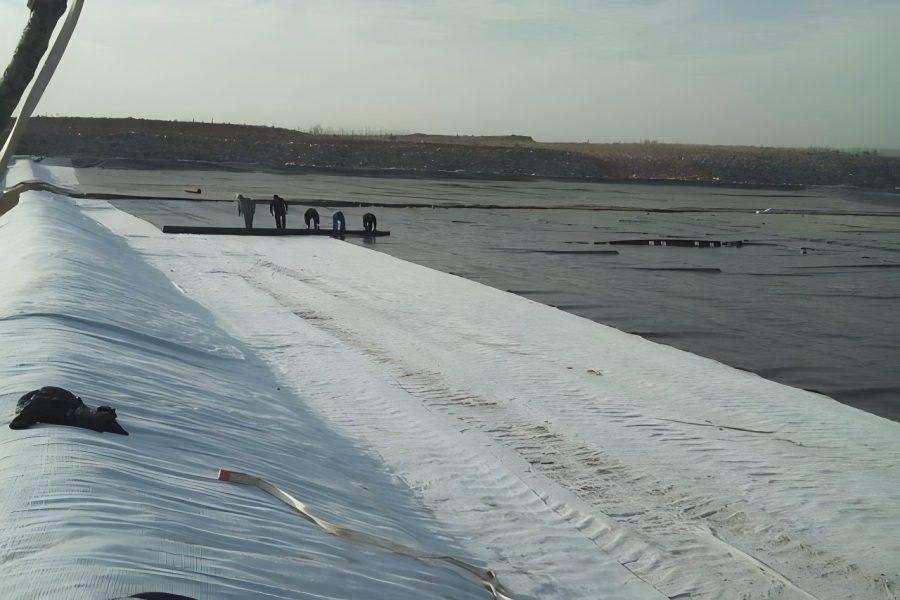
Even a high-quality geomembrane can fail if the installation is not properly managed. In many projects, the most vulnerable points are not the intact sections of the liner but the seams, penetrations, corners, and areas exposed to construction damage.
Several details deserve particular attention during installation.
Prepare the subgrade properly. The foundation should be stable and prepared according to the project design. Sharp objects, unsuitable debris, and other potential sources of puncture should be removed.
Plan the panel layout. Panel positioning should account for slopes, corners, structures, and site geometry. A well-planned layout can reduce unnecessary seams and make installation more manageable.
Control seam welding. Welding parameters must be appropriate for the geomembrane material, thickness, equipment, and site conditions. Trial seams and suitable testing procedures help confirm that the welding process is performing as intended.
Inspect and repair damage. Any suspected defects should be recorded, evaluated, and repaired using an approved procedure before the relevant area is accepted.
Keep installation records. Panel locations, seam identification, inspection results, and repair records provide a useful basis for quality verification and future maintenance.
Not every geomembrane supplier provides meaningful support beyond delivery. For customers without an experienced installation team, this can become a significant source of risk.
Jiantong offers technical guidance covering product selection, installation planning, laying, seam welding, and project acceptance. Its team draws on practical construction experience to help customers address site-specific challenges and coordinate material supply with installation requirements.
This kind of support is particularly useful for projects where installation quality is just as important as the properties of the material itself.
7. Make Sure the Installed Geomembrane Can Be Properly Tested
Factory testing confirms whether a product meets its specified material requirements. It does not, by itself, prove that the installed liner is free from defects.
Once the geomembrane has been laid and welded, the seams and the overall lining system need to be inspected according to the project quality plan.
Depending on the seam configuration, suitable inspection methods may include air-pressure testing of compatible double-track fusion seams and vacuum box testing of applicable seams. For certain installed lining systems, electrical leak location surveys may also be used to identify potential breaches.
The choice of method matters. A technique suitable for one seam type or liner configuration may not be appropriate for another. Testing should therefore be carried out by qualified personnel using methods suited to the actual installation.
Jiantong has developed a mobile field testing platform to support on-site geomembrane seam inspection and applicable leakage-related integrity assessments. This capability helps project teams check installation quality and address identified defects before final acceptance, where the selected method is suitable for the system.
For large reservoirs, landfills, and environmental containment projects, effective inspection can help identify problems earlier, when corrective work is generally easier to manage.
8. Match the Geomembrane to the Project Environment
A dependable geomembrane supplier should understand that different applications require different solutions. Choosing a product based solely on its general specifications can overlook important differences in operating conditions.
The following considerations can help guide the selection process.
| Project type | Main considerations |
|---|---|
| Landfill lining | Chemical compatibility, puncture protection, seam quality, and leak detection |
| Reservoirs and water storage | Seepage control, foundation conditions, environmental exposure, and installation quality |
| Water conservancy | Hydraulic conditions, slopes, subgrade stability, and construction requirements |
| Aquaculture ponds | Material suitability, water quality considerations, and puncture resistance |
| Wastewater treatment | Chemical exposure, operating temperature, and containment requirements |
| Municipal environmental projects | Design specifications, regulatory requirements, traceability, and inspection procedures |
These are starting points rather than universal specifications. The final choice should be based on the engineering design, site investigation, and applicable standards.
Jiantong works with customers across different containment and waterproofing applications, helping them consider product specifications alongside manufacturing quality and installation requirements. This application-focused approach is more useful than recommending the same product for every project.
9. Why Consider Jiantong for Your Geomembrane Project?
Choosing a geomembrane manufacturer is ultimately about confidence in the material and the people supplying it. Buyers need a supplier that can explain its products, maintain consistent manufacturing quality, meet delivery commitments, and provide technical support when questions arise.
Jiantong brings several capabilities together to support these requirements.
In-house manufacturing and testing
Direct control over production and testing helps the company coordinate manufacturing, inspection, and delivery more efficiently.
Ongoing technical development
Jiantong works to optimize material formulations and manufacturing processes to address the performance demands of different applications, including aging resistance, puncture resistance, and environmental durability.
Quality traceability
Documented procedures across raw material inspection, production, finished-product testing, and installation help customers verify quality and maintain project records.
Practical installation support
From product selection to on-site technical coordination, seam welding, and acceptance, Jiantong provides assistance intended to help customers manage installation more effectively.
Field inspection capabilities
Its mobile testing platform supports on-site seam inspection and suitable geomembrane integrity assessments, providing additional assistance during construction.
For contractors, distributors, and project owners, the value lies in having these capabilities coordinated rather than treating material supply, quality inspection, and installation support as completely separate tasks.
To learn more about Jiantong’s products and services, visit the official Jiantong website.
10. What Should You Confirm Before Placing an Order?
Before making a final decision, review the product and supplier against a few practical questions.
- Does the proposed geomembrane meet the project’s technical specifications?
- Are the material properties supported by relevant test reports?
- Can the manufacturer demonstrate consistent production and quality control?
- Are production capacity and delivery schedules clearly confirmed?
- Is the installation team familiar with the required welding and inspection methods?
- Can the supplier provide technical assistance when site problems arise?
- Are quality records, repairs, and final acceptance procedures clearly defined?
If any of these points remain unclear, resolve them before procurement. Doing so is generally easier and less expensive than dealing with a material or installation problem after construction has started.
Final Thoughts
A reliable geomembrane is not defined by thickness or price alone. Its performance depends on the suitability of the material, the consistency of manufacturing, the quality of installation, and the ability to verify the finished lining system.
For landfill containment, reservoirs, water conservancy, aquaculture, and municipal environmental projects, these factors should be evaluated together. A suitable product must meet the design requirements, while a capable manufacturer should provide the documentation, technical guidance, and support needed to put that product to work.
Jiantong combines geomembrane manufacturing, product testing, quality traceability, and installation assistance to support customers throughout the project process. If you are comparing geomembrane suppliers, start with your application requirements and ask for clear evidence of product performance and manufacturing quality.
Contact Jiantong to discuss your project specifications and find a geomembrane solution suited to your application. Making the right choice before construction begins can help reduce avoidable risks, control costs, and support reliable long-term containment performance.